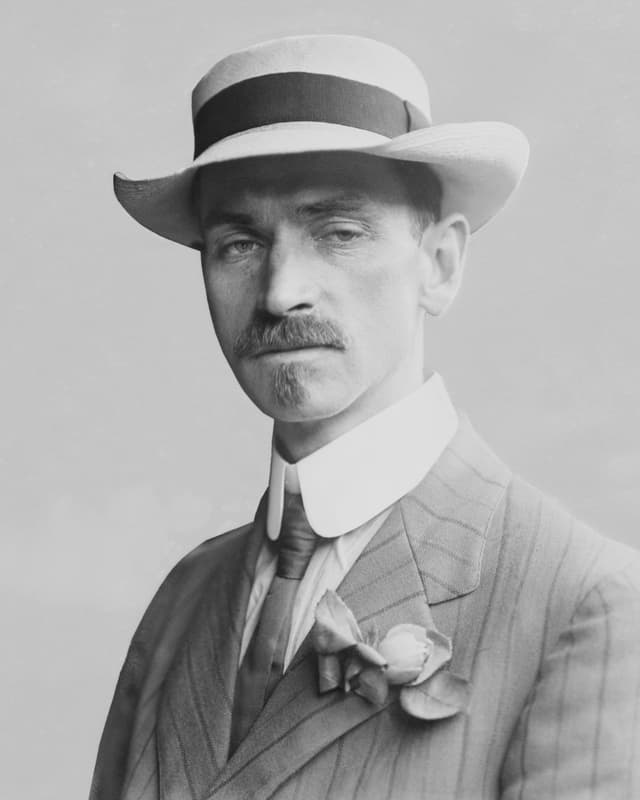
Glenn Curtiss
Curtiss Manufacturing Company / Herring-Curtiss Company
Born into poverty and faced with early challenges, Glenn Curtiss emerged as a pivotal figure in the aviation industry during the early 20th century. A self-taught mechanic, he founded the Curtiss Manufacturing Company and later the Herring-Curtiss Company, which played a crucial role in the development of early aircraft technology. His relentless determination led to significant achievements, including the establishment of the first commercially successful seaplane, the Curtiss Model F, which revolutionized aviation. Curtiss exemplified the core values of perseverance and integrity, understanding that character in partnerships is essential for sustainable success in business. Today, his legacy inspires entrepreneurs to innovate boldly while prioritizing ethical relationships in their ventures.
Core Principles
hiring
Be cautious of business partners or associates who cannot produce what they promise and make excuses repeatedly. When someone consistently fails to deliver on commitments with new explanations, this is a sign of fundamental dishonesty rather than circumstance.
Augustus Herring repeatedly promised to produce patent documents to Curtis and the board, then disappeared, reappeared with new excuses, and ultimately could not produce anything because the patents never existed. This pattern of consistent non-delivery should have signaled fraud immediately, demonstrating how obvious dishonesty often is in hindsight.
“Herring could not comply because there were no patents to produce.”
innovation
A master architect who conceptualizes solutions is fundamentally different from a master builder who executes and applies them. Both types of talent are necessary, but they serve different functions and have different comparative advantages.
Wilbur Wright is characterized as a master architect, a self-taught intuitive scientist who made intellectual leaps to solve intractable problems that had eluded the greatest minds. Glenn Curtiss was a master builder, a superb craftsman and applied scientist who could take ideas and turn them into practical, marketable products. Curtis's ability to engineer superior motors and build working aircraft faster created competitive advantage where Wilbur had only theoretical superiority.
“Wilbur Wright is a master architect, and Glenn Curtis was a master builder.”
leadership
You cannot make a good deal with a bad person. Character and integrity matter more than the apparent financial or strategic benefits a bad actor offers. Bad partnerships inevitably turn into costly nightmares.
Glenn Curtiss was persuaded by Augustus Herring, a known scammer and deceiver, that Herring held valuable patents and had financial connections for aircraft manufacturing. In reality, Herring had neither patents nor connections, was dishonest about his work, and the partnership nearly destroyed Curtiss financially. The lawsuit over the failed partnership cost Curtiss's heirs $500,000 and continued long after both men were dead.
“You can't make a good deal with a bad person.”
product
Constantly improving your product and staying engaged on the factory floor is more valuable for long-term business success than executive focus on legal protection or office management. The entrepreneur who never stops tinkering and innovating builds more sustainable competitive advantage.
While Wilbur Wright spent his final years consumed by patent lawsuits in executive and legal roles, Glenn Curtiss remained a fixture on the factory floor, constantly tinkering and inventing. Curtiss invented the throttle for motorcycles, created the most efficient motors in the world, designed the first seaplane, and held multiple speed records. His refusal to leave the engineering work meant he continuously improved his products, ultimately building a more successful company worth $30 million.
“No matter how big the business got, Curtis never ceased being a fixture on the factory floor.”
resilience
Dogged perseverance that refuses to give up is a core trait of successful inventors and builders. When faced with obstacles that would stop ordinary people, relentless determination to continue forward separates exceptional innovators from the rest.
Glenn Curtiss repeatedly faced situations where his projects seemed finished and hopeless, yet he refused to accept defeat. He recovered from failed business partnerships, financial crises, and competition from better-capitalized rivals through sheer persistence and continued tinkering, eventually building a $30 million company and becoming the most successful aviator of the early era.
sales
Find exceptional people who are naturally talented at selling or demonstrating your product, then hire them and give them latitude to showcase your offerings. Great salespeople and exhibition pilots create brand equity that compound over time.
Glenn Curtiss discovered Charles Hamilton, a natural pilot with remarkable ability to survive crashes and wow audiences. Curtiss gave Hamilton an exhibition contract and Hamilton's demonstrations grew crowds from hundreds to thousands. Hamilton kept Curtiss aircraft in the headlines and created customer demand through spectacular performances, similar to how Enzo Ferrari built brand equity through racing victories.
“Curtis signed Hamilton to an exhibition contract and then turned Hamilton loose on an eager public. The crowds, which began in the hundreds, grew to the thousands, and they loved him.”
Stories
Glenn Curtiss was born into poverty, his father died when he was four, and he completed only eighth grade. Yet he taught himself mechanics, built a camera from a cigar box at ten, constructed a telegraph from spools and wire at twelve, and by his early twenties had built a successful bicycle manufacturing company. He then invented the motorcycle throttle, built the world's most efficient aircraft engines, designed the first seaplane, and set speed records on land and in the air.
Lesson: Formal education, inherited wealth, and privileged birth are not prerequisites for becoming a world-class innovator and builder. Relentless tinkering, mechanical intuition, and the willingness to improve every product you touch can overcome any disadvantage.
Augustus Herring repeatedly promised Glenn Curtiss that he had valuable patents for aircraft stability and financial connections for commercialization. The Herring-Curtiss partnership was formed with Herring receiving most of the stock while Curtiss provided almost all the money. Herring then disappeared for a month, and when pressed for the patents, claimed he would produce them later. He never did because they never existed. The lawsuit over this failed partnership continued past both men's deaths and cost Curtiss's heirs $500,000.
Lesson: When a business partner consistently fails to deliver on commitments with new excuses rather than producing results, this is a clear signal of dishonesty. The pattern of non-delivery is often obvious if you pay attention. Bad partnerships between good people and bad people produce costly, long-lasting damage.
Frequently Asked Questions
What are Glenn Curtiss's key business principles?▼
Glenn Curtiss's core principles include: Be cautious of business partners or associates who cannot produce what they promise and make excuses repeatedly. When someone consistently fails to deliver on commitments with new explanations, this is a sign of fundamental dishonesty rather than circumstance.. A master architect who conceptualizes solutions is fundamentally different from a master builder who executes and applies them. Both types of talent are necessary, but they serve different functions and have different comparative advantages.. You cannot make a good deal with a bad person. Character and integrity matter more than the apparent financial or strategic benefits a bad actor offers. Bad partnerships inevitably turn into costly nightmares.. Founder Almanac has cataloged 6 total principles from Glenn's career.
What can entrepreneurs learn from Glenn Curtiss?▼
Key lessons from Glenn Curtiss include: Formal education, inherited wealth, and privileged birth are not prerequisites for becoming a world-class innovator and builder. Relentless tinkering, mechanical intuition, and the willingness to improve every product you touch can overcome any disadvantage.. Explore 2 stories and 0 frameworks from Glenn's experience.
What is Glenn Curtiss known for in business?▼
Born into poverty and faced with early challenges, Glenn Curtiss emerged as a pivotal figure in the aviation industry during the early 20th century. A self-taught mechanic, he founded the Curtiss Manufacturing Company and later the Herring-Curtiss Company, which played a crucial role in the development of early aircraft technology. His relentless determination led to significant achievements, including the establishment of the first commercially successful seaplane, the Curtiss Model F, which revolutionized aviation. Curtiss exemplified the core values of perseverance and integrity, understanding that character in partnerships is essential for sustainable success in business. Today, his legacy inspires entrepreneurs to innovate boldly while prioritizing ethical relationships in their ventures.
More Aviation & Aerospace Founders
Want Glenn's advice on your business?
Our AI has studied Glenn Curtiss's biography, principles, and decision-making frameworks. Ask any business question.
Start a conversation