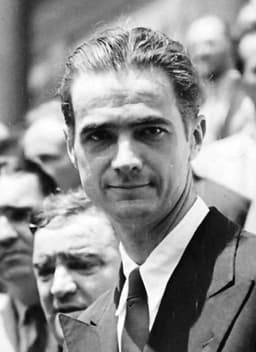
Henry Singleton
Teledyne
A pioneering figure in the Aviation and Aerospace industry, Henry Singleton founded and led Teledyne from the 1960s to the 1990s, emphasizing the importance of masterful capital allocation as a key responsibility for founders. Under his leadership, Teledyne's innovative approach to radical decentralization transformed large operations into independent profit centers, significantly reducing organizational fragility. During the early 1970s, when Wall Street turned away from conglomerates, Singleton seized the moment by implementing unprecedented share buyback tender offers, successfully boosting shareholder value despite a plummeting stock price. His philosophy revolved around optimizing for free cash flow rather than mere reported earnings, a principle that continues to resonate with entrepreneurs striving for sustainable success today.
Core Principles
culture
Maintain ethical behavior and honesty in all dealings, teaching this principle consistently to everyone in your organization.
Roberts notes that Singleton 'made me preach and teach ethical behavior in every way, in every day, in every meeting that we held.' This was not a peripheral concern but a core teaching, emphasized repeatedly across all organizational activities.
Teach your philosophy and management principles repeatedly to your organization, recognizing that consistent education is essential to embedding values.
Singleton consistently communicated his philosophy through interviews, shareholder letters, and conversations with managers. He understood that unique ideas and approaches needed to be taught and reinforced repeatedly to ensure organization-wide adoption and understanding.
finance
Master capital allocation as your primary founder responsibility. Most founders excel at operations but neglect the critical skill of deploying cash to maximize shareholder returns.
Singleton focused the majority of his time on strategic capital allocation decisions while delegating operations to George Roberts. This contrasted sharply with his peers who focused on growth and size. The distinction between running operations efficiently and deploying capital effectively is fundamental, yet no business schools teach capital allocation.
“Founders need to do two things well to be successful: run their operations efficiently and deploy the cash generated by those operations. Those are two completely different skills.”
Optimize for free cash flow, not reported earnings or revenue growth. Build your accounting systems and incentives to maximize cash generation over quarterly earnings.
Teledyne devised the 'Teledyne Return' metric that averaged cash flow and net income, and tied executive compensation to this metric rather than reported earnings. Singleton explicitly stated their accounting was set to maximize cash flow, which meant quarterly earnings would 'jiggle'. This cash focus informed every strategic decision.
“If anyone wants to follow Teledyne, they should get used to the fact that our quarterly earnings will jiggle. Our accounting is set to maximize cash flow, not reported earnings.”
Buy back your own stock instead of pursuing acquisitions when valuations are unattractive. Buying back undervalued shares often generates better returns than external growth.
Singleton executed eight separate tender offers between 1972 and 1984, repurchasing 90 percent of Teledyne's shares. These buybacks generated a 42 percent compound annual return. He contrasted this with the conventional wisdom that share repurchases signaled weakness, proving Wall Street wrong through superior results.
“Arthur, I've been thinking about it and our stock is simply too cheap. I think we can earn a better return buying our shares at these levels than by doing almost anything else.”
Do not refund capital to shareholders through dividends if you can redeploy it at superior returns. Avoid double taxation and maintain flexibility.
Teledyne paid no dividend for its first 26 years, arguing that shareholders who spent dividend income would waste it, and that profits had already been taxed once. With Teledyne earning 33 percent on equity, Singleton believed he could reinvest the money better than shareholders could. Avoiding dividends also preserved cash for buybacks.
“What would the stockholder do with the money, spend it? Teledyne is not an income stock. Would they reinvest it? Since Teledyne earns 33 percent on equity, he can reinvest it better for them than they could for themselves.”
Think of capital allocation as a series of tools to deploy flexibly based on market conditions. Be willing to sell high and buy low, switching between acquisitions, repurchases, and investments as the situation warrants.
Great capital allocators must master the skill of both selling high and buying low. Singleton issued stock at average P/E ratios over 25 times in the 1960s, then repurchased at an average multiple under 8 in the 1970s and 1980s. He deployed different allocation strategies depending on whether the currency (stock price) was attractive.
focus
Develop a single metric that captures what truly matters, and organize your entire company around it. Do not try to optimize multiple variables simultaneously.
Rather than chasing dozens of business metrics, Singleton created the 'Teledyne Return' specifically focused on cash generation. This metric became the basis for all compensation and capital allocation decisions. Charlie Munger observed that the winning system goes 'ridiculously far in maximizing or minimizing one or a few variables'.
Avoid the appearance of activity and unnecessary public engagement. Resist pressure to communicate with analysts, attend conferences, or appear in media.
Singleton was known as 'the Sphinx' because he rarely spoke to reporters or analysts and never appeared on Fortune magazine's cover. He avoided airport travel and limousine culture, having business unit heads come to him. This freed him from the distraction of managing external perceptions.
Focus your time and energy where you create the most value, and ensure this aligns with your unique strengths and expertise.
Singleton spent years in operations and hands-on management before eventually transitioning to capital allocation and investment work, his true area of excellence. He recognized where he could create the most value and eventually delegated operations to capable leaders so he could focus on financial strategy and stock market analysis.
hiring
Surround yourself with talented, creative people who are strong managers and doers, and keep searching for this caliber even among managers of small operations.
Singleton's success was built on attracting and retaining exceptional talent at every level. He prioritized finding skilled people who could think creatively and execute, understanding that people were the most important factor in business success. When acquiring companies, he often kept the original owner-managers because they had the deepest knowledge of their business.
“The key to his success was people. Talented people who were creative, good managers and doers.”
leadership
Give capable managers autonomy to run their operations and avoid unnecessary interference when they are performing well.
Singleton believed deeply that talented managers needed to be trusted and given freedom to do their jobs. He maintained a light-touch management approach, noting that if managers were performing well, there was no reason to bother them with excessive oversight or control.
“Why bother them if they're doing their job?”
Make major investment and capital allocation decisions independently based on rigorous analysis rather than seeking consensus or input from others.
Singleton famously made all major investment decisions and stock buyback decisions on his own, often without notice even to his second-in-command George Roberts. He would analyze markets, identify opportunities, and execute decisions based on his mathematical analysis and conviction, not committee input or external validation.
Do not seek control or board representation in companies where you own significant stakes if you believe they are well-managed and don't need your input.
Despite being the largest shareholder in nine Fortune 500 companies with enough voting power for effective control in six of them, Singleton never sought board seats or attempted to exercise control. He respected management's expertise and maintained his equity for financial returns rather than operational control.
“On Singleton, he has been absolutely scrupulous in staying out of our affairs.”
mindset
Develop your judgment through decades of study and experience before founding. Build a foundation of knowledge that allows you to trust your own decision-making.
Singleton spent over 20 years working at General Electric, Hughes Aircraft, and Lytton Industries before founding Teledyne at age 43. This training period allowed him to develop the judgment necessary to make idiosyncratic decisions with confidence. Once he could trust his judgment, he ignored all external opinions.
Resist pressure to maintain rigid organizational structures or strategic positions. Preserve maximum flexibility to adapt as external circumstances change.
Singleton's philosophy was to define his job not in rigid terms but in terms of having the freedom to do whatever seemed in the best interest of the company at any given time. He rejected quarterly guidance and maintained strategic flexibility. His willingness to pivot strategies entirely (from acquisitions to buybacks to portfolio management) proved profitable.
“I do not define my job in any rigid terms, but in terms of having the freedom to do whatever seems to me to be in the best interest of the company at any given time.”
Be supremely rational and independent from ideology. Avoid becoming emotionally attached to previous positions or conventional wisdom.
Charlie Munger said Singleton was one of the very few people who was 100 percent rational all the time. Singleton resisted fads, fashions, and peer pressure. He didn't split stock when pressured, didn't attend conferences, and didn't explain himself to Wall Street, instead following pure logic in capital allocation.
“I believe in maximum flexibility so I can reserve the right to change my position on any subject when the external environment relating to any topic changes too.”
Invest in yourself and your own convictions rather than waiting for external validation or consensus before acting.
When the president of Lytton Industries disagreed with Singleton's conviction that semiconductors would become dominant, Singleton left to found Teledyne. He had faith in his analysis and was willing to bet his career on it, even while the industry debated the technology's future.
“Henry had faith in his convictions.”
Work with intense focus and isolation to develop original ideas and strategies rather than seeking external input or conference participation.
Singleton worked largely in isolation in his corner office, developing ideas through deep analysis and mathematical modeling. He did not attend industry conferences or seek external validation. This solitary approach allowed him to think independently from consensus and develop superior strategies that others had not yet conceived.
“That corner office produced a cornucopia of ideas.”
operations
Design your organization to avoid fragility through radical decentralization. Break large operations into numerous small, independent profit centers where no single failure can jeopardize the whole.
Teledyne operated 129 separate profit centers, with the largest generating under $300 million in annual sales. Headquarters employed fewer than 50 people for a company with over 40,000 employees. Singleton believed that with size comes fragility, and decentralization mitigates risk while maintaining accountability.
“We go to an extreme in splitting businesses up so we can see problems which would be passed over in companies where the units are larger. By our plan, no one business all by itself will become momentous.”
Practice extreme frugality with capital spending. Only invest in projects that will quickly pay off through enhanced cash flow, not for strategic positioning or scale.
Teledyne spent only $100 million on capital projects in a year when cash flow exceeded $300 million, while competitors spending three times as much. Singleton believed the real secret to growth was discipline and avoiding ego-driven investments. Most companies spend more on capital than they generate in cash, but Teledyne never did.
“The key then is discipline. No ego trips. Only new investments that will quickly pay off in the forms of enhanced cash flow.”
Set high margins as a non-negotiable requirement for any business in your portfolio. Make it difficult for managers to get new capital unless they achieve superior profitability.
Teledyne's management philosophy built high margins into the system by controlling capital allocation. Managers who could grow rapidly while maintaining high margins were richly rewarded. Those with low margins found it nearly impossible to secure capital, creating powerful incentives for margin discipline.
“A company can grow rapidly and its manager be rewarded richly for that growth if he has high margins. If he has low margins it's hard to get capital from Henry and me.”
Keep operating units small so that individual managers have clear responsibility for their unit's success and maintain motivation to perform.
Teledyne maintained a policy of keeping operating units small, similar to the modern concept of two-pizza teams. This gave management better control and made the local manager fully responsible for the success of their operation, which motivated superior performance across the company.
“Our policy of keeping our operating units small, each responsible for its own success, is something we followed throughout the corporation.”
Measure operational performance using metrics that capture both cash return and profit to ensure sustainable performance.
Rather than relying solely on management by cash flow metrics, Teledyne developed its own measurement called the Teledyne Return, which averaged cash return and profit. This comprehensive metric helped the company ensure that growth was sustainable and that managers were creating genuine value.
Frameworks
The Teledyne Return
A custom capital allocation metric that averages cash flow and net income for each business unit. Compensation for all general managers was tied directly to this metric rather than reported earnings or revenue. This framework ensured the entire organization was aligned with cash generation rather than accounting profits or growth metrics.
Use case: When you need to align a decentralized organization around a single objective and prevent individual units from optimizing for the wrong metrics.
The 129 Profit Centers Model
Structuring a large company into numerous small, independent operating units, each run by an empowered general manager. No single unit is large enough to create systemic risk if it fails. This model combines the advantages of centralized capital allocation with the agility and accountability of independent businesses.
Use case: When scaling a company beyond a certain size, to maintain entrepreneurial energy, visibility into problems, and protection against fragility while preserving capital discipline.
The Capital Allocation Toolkit
A framework that treats capital allocation as a flexible set of tools including acquisitions, share repurchases, organic reinvestment, and portfolio management. The founder assesses which tool is optimal given current valuations and market conditions, and switches strategies when circumstances change. Each tool is deployed with the goal of maximizing per-share value.
Use case: For founders managing substantial free cash flow who need to decide how to deploy capital in different market environments and economic cycles.
Buy Low, Sell High Capital Deployment
A disciplined approach to timing capital allocation decisions based on relative valuations. Issue stock when valuations are high (average P/E over 25), use cash and debt to repurchase when valuations are low (average P/E under 8), and make selective acquisitions when target companies are undervalued but operationally sound.
Use case: When managing a company with volatile stock valuations and the flexibility to choose between issuing shares, repurchasing shares, or making acquisitions based on relative value.
Steering the Boat Daily
A management approach where leaders make daily decisions based on current market conditions and emerging opportunities rather than following rigid long-term plans. Leaders maintain flexibility, analyze external influences that cannot be predicted, and adjust course continuously. This contrasts with traditional strategic planning that locks organizations into inflexible multi-year plans.
Use case: Effective in rapidly changing industries, uncertain competitive environments, and markets with unpredictable external factors. Particularly valuable for innovation-driven and technology companies where industry dynamics shift frequently.
Three Great Ideas Framework
Singleton's strategic framework for building Teledyne consisted of three pillars: (1) Recognizing the future importance of a transformational technology (semiconductors) and building a base in that growing field through acquisitions; (2) Creating a stable financial foundation through acquiring financial and insurance companies to provide capital resources; (3) Using innovative capital allocation strategies like stock buybacks to strengthen the corporation and enhance shareholder value. Together these three ideas created sustainable growth.
Use case: Applicable to founders building diversified corporations or platforms across multiple market segments. The framework shows how identifying a growth trend, securing financial stability, and deploying smart capital allocation create durable competitive advantages.
The Teledyne Return Metric
A proprietary measurement system that combines cash return and profit into a single metric to evaluate business unit performance. Rather than relying solely on cash flow or profit individually, this averaging approach ensures that managers optimize for sustainable, real value creation rather than manipulating a single metric.
Use case: Useful for diversified companies with multiple business units where you need to ensure genuine profitability and cash generation. Helps prevent managers from gaming metrics and encourages balanced focus on both profitability and financial health.
Vertical Integration by Value Chain Proximity
A targeted acquisition strategy where the acquirer identifies critical suppliers, component manufacturers, or material providers within their value chain and acquires them. Rather than building from scratch or diversifying into unrelated fields, this approach focuses on controlling the inputs and economics of your core business while deepening expertise.
Use case: Effective when you have deep technical understanding of your industry and can identify value creation opportunities in adjacent value chain segments. Particularly powerful in capital-intensive industries where material costs and supply reliability are critical competitive factors.
The Branching Tree Growth Model
A metaphor for organizational structure where companies grow like a tree with multiple branches, sub-branches, and leaves, rather than as a single trunk. Each company or division is sized to be significant but not dominant, with no single business large enough to threaten the whole organization if it fails. New technologies from one branch create opportunities to grow related branches.
Use case: Useful for managing portfolio companies and diversified conglomerates. Helps prevent organizational risk concentration and ensures that the failure of any single business unit remains manageable at the corporate level.
Stories
In the early 1970s when Wall Street abandoned conglomerates and Teledyne's stock price plummeted, Singleton recognized the opportunity and launched unprecedented share buyback tender offers. Shareholders who tendered at $14 or $40 watched as shares soared to $130 within years. Singleton had been right; Wall Street and his own directors had been wrong.
Lesson: Independent judgment and conviction in the face of overwhelming market skepticism can generate extraordinary returns. The best opportunities often appear at moments of maximum pessimism.
Singleton invested over $130 million, representing 25 percent of Teledyne's entire portfolio, into a single company, Lytton Industries. When other investors fled due to a costly shipbuilding dispute with the US Navy, Singleton recognized it as an isolated problem, not a systemic business failure. The investment eventually doubled in value to $270 million.
Lesson: When you have genuine expertise about a business and can distinguish between temporary setbacks and permanent competitive disadvantages, concentrated bets on undervalued assets can generate exceptional returns. Knowledge creates the ability to take larger risks confidently.
When Teledyne's Packard Bell television manufacturing division faced permanent competitive disadvantage against lower-cost Japanese competitors, Singleton immediately shut it down rather than continuing to burn capital. This made the remaining parts of Packard Bell larger and more profitable. Singleton became the first American TV manufacturer to exit the industry, a move competitors reluctantly followed.
Lesson: Willingness to shrink and exit underperforming businesses is more profitable than the obsession with growth. Sometimes the best capital allocation decision is to stop allocating capital to a specific business.
In 1969, as Teledyne's stock multiple declined from over 25x earnings to lower valuations, Singleton immediately dismissed his entire acquisition team and stopped making material purchases for the rest of the company's history. He recognized that the currency advantage that made acquisitions attractive in the 1960s no longer existed, and pivot to share repurchases as the superior capital allocation vehicle.
Lesson: Great capital allocators adapt their strategy when circumstances change. Being willing to completely abandon a previously successful approach when conditions shift separates exceptional founders from average ones.
Jay, who ran one of Teledyne's early semiconductor manufacturing operations, came to Henry saying he needed $100,000 to keep the operation going. Henry wrote him a check for only $60,000 with the explanation that was all the money in the entire company. Jay was shocked at how precarious the situation truly was, illustrating just how touch-and-go the early days of Teledyne really were.
Lesson: Financial discipline is not optional in startups: it is survival. Resources must be allocated with extreme care, and leaders must understand exactly how much capital they have available. This constraint forces creative problem-solving and ruthless prioritization.
One of Singleton's acquired company managers asked if he should turn the task of dissolving his original corporation over to Teledyne's legal team. Singleton said they could handle it themselves and helped the manager do the legal research and paperwork. The task was completed at a total cost of just $37. This lesson stayed with the manager for 18 years of working under Singleton's leadership.
Lesson: Question assumptions about necessary costs and overhead. Many expenses are incurred through convenience or habit rather than necessity. Doing work yourself or finding efficient alternatives can dramatically reduce costs without sacrificing results. This mindset compounds across an organization.
During his time at MIT, Singleton demonstrated his exceptional mind by playing chess with his back turned to the board while his opponent Tex called out moves. Mid-game, Singleton corrected Tex, saying he had misstated a move from three moves back. Without even seeing the board, Singleton was maintaining perfect memory and visualization of the entire game state.
Lesson: Elite talent possesses exceptional cognitive capabilities that enable superior pattern recognition and analytical ability. These mental strengths, developed through deep study and practice, create competitive advantages that are difficult for others to replicate.
Roberts describes how Singleton would sit in his corner office and develop original strategic ideas through intense analysis. Arthur Rock, who helped finance Teledyne, said Henry had a singleness of purpose and tenacity that was overpowering, but also noted he was quite aloof, operating more or less by himself in that corner office while dreaming up ideas. The corner office produced a cornucopia of ideas that shaped Teledyne's strategy.
Lesson: Strategic breakthroughs often come from isolation and deep focus rather than consensus-building or committee work. Talented thinkers need uninterrupted time to analyze complex problems, develop original perspectives, and think independently from prevailing wisdom.
When Singleton recognized in the 1950s that semiconductors and digital technology would become dominant in electronic systems, he wanted Lytton Industries to enter the semiconductor field. The president disagreed with his conviction. Rather than argue further, Singleton left Lytton Industries to start Teledyne with $450,000 in capital. Within eight years, that initial capital became a company with $450 million in sales and $1.5 billion in market value.
Lesson: When you have a strong conviction about a strategic direction and your organization lacks the vision to pursue it, you have a choice: persuade others or strike out on your own. Investing in your own convictions may be the highest-return activity available to you.
During the bear market of the early 1970s when Teledyne stock fell dramatically, Singleton walked into George Roberts' office and announced he would make a bid for company stock at $20 per share. George was totally amazed and hadn't been given any hint beforehand. Singleton had analyzed the opportunity independently and made the decision alone, trusting his analysis that the stock was undervalued.
Lesson: Major capital allocation decisions require independent analysis and conviction. The best opportunities often come when others are fearful. Leaders should not wait for consensus or even input from their management team before deploying capital to exploit market dislocations.
Notable Quotes
“I don't believe all this nonsense about market timing. Just buy very good value, and when the market is ready, the value will be recognized.”
Singleton's philosophy on stock repurchases and portfolio investing, rejecting the obsession with market timing and instead focusing on buying genuine value regardless of market sentiment.
“If anyone wants to follow Teledyne, they should get used to the fact that our quarterly earnings will jiggle. Our accounting is set to maximize cash flow, not reported earnings.”
Singleton explaining Teledyne's unconventional accounting approach, prioritizing cash generation over earnings smoothness, which would appear unusual to Wall Street analysts.
“Our attitude towards cash generation and asset management came out of our own thought process. It is not copied. After we acquired a number of businesses, we reflected on aspects of business. Our own conclusion was that the key was cash flow.”
Singleton explaining that Teledyne's cash flow obsession emerged from independent analysis rather than copying other companies, and was developed through hard-won experience acquiring multiple businesses.
“I prefer to buy pieces of other companies or our own stock or expand from within. The price for buying an entire company is too much.”
Singleton's contrarian take on acquisitions versus alternatives, explaining why paying control premiums for entire companies destroys shareholder returns compared to buying shares on the open market.
“Why pay 10 times earnings in a tender for a company when I can buy pieces of companies for six times earnings and my own stock for five times earnings? Rigid logic, that, but not the fashionable view.”
Singleton contrasting his purely logical approach to capital allocation with the fashionable view on Wall Street, demonstrating the mathematical advantage of buybacks over acquisitions.
“What would the stockholder do with the money, spend it? Teledyne is not an income stock. Would they reinvest it? Since Teledyne earns 33 percent on equity, he can reinvest it better for them than they could for themselves.”
Singleton's explanation for Teledyne's no-dividend policy, arguing that retaining earnings and reinvesting at 33 percent returns was superior to paying them out and forcing shareholders to pay taxes again.
“I do not define my job in any rigid terms, but in terms of having the freedom to do whatever seems to me to be in the best interest of the company at any given time.”
Singleton's philosophy on maintaining strategic flexibility and refusing to be constrained by previous positions or external expectations, allowing him to adapt to changing circumstances.
“I believe in maximum flexibility so I can reserve the right to change my position on any subject when the external environment relating to any topic changes too.”
Singleton explaining his commitment to rationality over ideology, indicating his willingness to reverse previous decisions when facts change rather than becoming rigidly attached to positions.
“It's hard to believe that heads of a $3 or $4 billion business would not be able to handle one business problem.”
Singleton explaining his rationale for investing heavily in Lytton Industries despite its shipbuilding problem, arguing that temporary operational issues were not indicative of poor overall management quality.
“Arthur, I've been thinking about it and our stock is simply too cheap. I think we can earn a better return buying our shares at these levels than by doing almost anything else.”
Singleton's casual decision to launch share repurchases in 1972, calling board member Arthur Rock from a Manhattan phone booth to propose what became the most aggressive buyback program in corporate history.
Frequently Asked Questions
What are Henry Singleton's key business principles?▼
Henry Singleton's core principles include: Maintain ethical behavior and honesty in all dealings, teaching this principle consistently to everyone in your organization.. Teach your philosophy and management principles repeatedly to your organization, recognizing that consistent education is essential to embedding values.. Master capital allocation as your primary founder responsibility. Most founders excel at operations but neglect the critical skill of deploying cash to maximize shareholder returns.. Founder Almanac has cataloged 30 total principles from Henry's career.
What can entrepreneurs learn from Henry Singleton?▼
Key lessons from Henry Singleton include: Independent judgment and conviction in the face of overwhelming market skepticism can generate extraordinary returns. The best opportunities often appear at moments of maximum pessimism.. Explore 10 stories and 9 frameworks from Henry's experience.
What is Henry Singleton known for in business?▼
A pioneering figure in the Aviation and Aerospace industry, Henry Singleton founded and led Teledyne from the 1960s to the 1990s, emphasizing the importance of masterful capital allocation as a key responsibility for founders. Under his leadership, Teledyne's innovative approach to radical decentralization transformed large operations into independent profit centers, significantly reducing organizational fragility. During the early 1970s, when Wall Street turned away from conglomerates, Singleton seized the moment by implementing unprecedented share buyback tender offers, successfully boosting shareholder value despite a plummeting stock price. His philosophy revolved around optimizing for free cash flow rather than mere reported earnings, a principle that continues to resonate with entrepreneurs striving for sustainable success today.
More Aviation & Aerospace Founders
Want Henry's advice on your business?
Our AI has studied Henry Singleton's biography, principles, and decision-making frameworks. Ask any business question.
Start a conversation