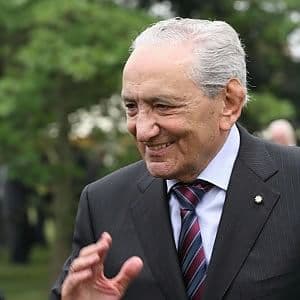
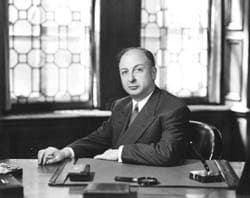
Michele Ferrero
Ferrero SpA
A visionary in the food industry, Michele Ferrero transformed Ferrero SpA into a global powerhouse known for its premium confectionery products, including iconic brands like Nutella and Ferrero Rocher. Under his leadership, the company emphasized a customer-centric approach, treating each product as an artistic creation and commanding premium prices that reflected the extraordinary quality. Ferrero's commitment to innovation led to the invention of entirely new product categories, ensuring the brand stood out in a competitive marketplace dominated by larger rivals. His legacy continues to inspire entrepreneurs today, underscoring the importance of placing the customer at the heart of business decisions and striving for excellence in every aspect of product development.
Core Principles
culture
View creating wealth as a moral obligation to provide long-term stability and dignity for your employees and their families, not as an end in itself.
Ferrero provided free buses from rural villages, free medical care, housing support, and lifelong employment. He built shrines to the Madonna in every factory and lived by Catholic principles that wealth was justified only if used for the common good. In over 70 years, his workforce never struck once. He viewed the company as having a covenant to its workers.
“I pledge myself to devote all of my activities and all of my efforts to this company. I shall only feel satisfied when I've managed to guarantee you and your children a safe and tranquil future.”
customer obsession
Actively listen to problems and feedback from employees and customers rather than celebrating successes, using this intelligence to drive continuous improvement.
Ferrero would ask factory workers Tell me the problems, tell me the problems, understanding that if he knew the problems he could solve them. He believed good news takes care of itself but bad news requires attention. He constantly interviewed customers about products they disliked, understanding that negative feedback was more valuable than praise.
“Tell me the problems, tell me the problems. If I know the problems, I can figure out the solutions.”
Place the customer at the absolute center of all business decisions and give that customer a name and identity so you design for a specific person, not a faceless market.
Ferrero called his ideal customer Mrs. Valeria and repeated constantly that she was the real CEO of the company. He made all product decisions with her in mind, believing that if Mrs. Valeria would buy his products, he could pay his employees. He would interview real customers incognito behind glass mirrors to understand their needs and feedback.
“Remember that if we're good, Mrs. Valeria will buy from us and I can pay all of you. If she doesn't buy, I can pay you for a month and then I have to send you home. That's why I am first a servant of Mrs. Valeria.”
finance
Remain privately held and family-owned to preserve independence, avoid external shareholder pressure, and maintain the freedom to pursue long-term quality improvements over short-term profits.
Ferrero rejected going public or taking outside capital throughout his 70-year career. By remaining 100% family-owned with no debt, he could pursue products that lost money for 5-10 years before becoming successes. This allowed him to experiment patiently and resist the pressure to optimize purely for quarterly growth.
“This allowed us to grow calmly to have long term plans to know how to wait and to not be caught up in the frenzy of the daily ups and downs.”
focus
Maintain intense focus and eliminate distractions by saying no to almost everything except the core activity you are most passionate about, rejecting honors and public recognition as unnecessary distractions.
Ferrero declined honorary degrees and official accolades, avoided press conferences for 65 years, never held interviews until he was near death, and always wore dark sunglasses to maintain anonymity. He saw external recognition as a distraction from the work itself. He focused exclusively on product research and customer service rather than building a personal brand.
“I feel I must continue to concentrate on the work that I'm most passionate about, the research for new products.”
hiring
Recruit top talent from local communities by personally identifying the best students in nearby schools and offering them stable lifetime employment and advancement.
Rather than competing for talent in big cities, Ferrero visited local schools and personally recruited the top students. This allowed him to build a loyal, motivated workforce that stayed for 30+ years and brought family members into the company. It also supported rural communities by keeping jobs local rather than forcing migration to cities.
innovation
Invest heavily in the latest technology and machinery as a moral imperative to scale production and reach more customers, not as optional.
Ferrero was fascinated by machinery and believed it had a soul. He traveled worldwide seeking the best machines, customized them extensively, and built proprietary equipment in-house. He invested continuously in automation, viewing this as essential to growing employment and reaching more people with his products. One custom machine turned out 22,000 boxes per hour.
“We need technology and innovation to grow in production and employment. I've always been particularly fascinated by machinery. When I see it moving, it seems to me that has a soul, like a person.”
Insist on differentiation and inventing entirely new product categories rather than competing in existing markets where larger competitors can crush you.
Ferrero created Nutella, Kinder chocolate, Tic Tacs, and Ferrero Rocher, each in entirely new or reimagined categories. He refused to imitate larger competitors, instead inventing products no one else had made before. He framed his company as a small boat that couldn't win against fighter bombers by copying their moves.
“If you want to go bankrupt, just listen to everybody. We must do something new, something different, something unique and something against the current. If we imitate the products of our big competitor companies, we will inevitably lose because they will crush us with their strength.”
leadership
Treat business leadership succession as a gradual handoff in later years while maintaining your own involvement, ensuring continuity while testing the next generation.
At age 70, Ferrero appointed his two sons Pietro and Giovanni as co-CEOs while he remained chairman overseeing major decisions. When Pietro died at 47, Giovanni took sole control, but Ferrero continued experimenting in his private laboratory and mentoring his son. This allowed him to step back without fully stepping away, ensuring the family vision endured.
Repeat your core principles and maxims obsessively, 60 times per week if necessary, to ensure even the most stubborn team members internalize and adopt your key ideas.
Ferrero had a series of maxims he repeated constantly, such as his motto about doing things differently from others. People working with him noted he would repeat the same principles over and over because he believed in the persuasive power of repetition. This is identified as a common practice among the very best founders.
“Only on two occasions should the papers mention one's name, birth and death.”
mindset
Treat work as a spiritual necessity and moral calling rather than merely a financial pursuit, understanding that this obsessive dedication is what drives true excellence.
Ferrero said for him work was a spiritual necessity he couldn't do without, that only work could entirely absorb him, and that his greatest dream was for others to realize he lived for work. He worked seven days a week, overnight, with no other life outside the business. This wasn't portrayed as a burden but as his deepest source of meaning.
“For me work is a spiritual necessity. I was accustomed to it from a young age and I can't do without it. Only work has the ability to entirely absorb me. My greatest dream is for others to realize that I live for work.”
Embrace long-term orientation and patience, allowing new products to lose money for 5-10 years before they succeed, trusting your intuition that customers will eventually realize what they need.
Ferrero developed a cold tea product that lost money for 10 years before becoming a huge success. He refused to abandon it despite poor early returns because he believed Mrs. Valeria didn't yet realize she needed it. This patience was only possible because he remained family-owned and avoided shareholder pressure for immediate returns.
“If a new product for the first two years doesn't make money, that doesn't matter. You must think in the span of five or six years.”
operations
Make product quality verification personal and non-delegable, requiring leadership to personally inspect quality on site rather than trusting reports alone.
Ferrero would helicopter between Monte Carlo and his factories to personally inspect quality. He believed you had to verify product quality in person because seeing with your own eyes revealed things that reports couldn't capture. This hands-on approach extended to tasting rooms where he spent entire days personally testing formulations.
“You have to verify the quality of the product in person.”
Control the entire value chain through vertical integration, from raw material sourcing to manufacturing to distribution, to safeguard quality, secrets, and supply security.
Ferrero acquired hazelnut plantations in both hemispheres to control one-third of the world's hazelnut supply, built custom machinery in-house that competitors couldn't replicate, designed his own distribution fleet (the largest private fleet in Italy), and manufactured most production equipment himself rather than relying on external suppliers.
“We are particularly interested in following the product to all of its phases. When it's broken down in the crumbs, when it takes shape, and when it leaves the factories, when it enters the homes where the judgment will be pronounced a judgment that can make our fortune or our ruin.”
Create distribution infrastructure that serves dual purposes of scale and identity, using branded vehicles and direct-to-retailer sales to reinforce brand presence while bypassing wholesalers.
Rather than selling to wholesalers, Ferrero built his own distribution fleet of thousands of branded vehicles, from small Fiats to buses, all painted with Ferrero branding. By the 1950s this was the largest private fleet in Italy, second only to the Italian army. This allowed him to control his product presentation and build brand awareness simultaneously.
product
Frame products as discoveries of latent customer needs rather than as mere goods, positioning the business as creating mythical products that define new categories and markets.
Ferrero said we create mythical products that create the markets, not products for existing markets. He viewed his role as discovering what customers didn't yet realize they needed, like the Kinder Surprise that captured the magic of Easter year-round, or cold tea that took 10 years to find its audience.
“We create mythical products that create the markets.”
Pay obsessive attention to every detail of production, from the altitude at which lemons are grown to the exact proportions of each ingredient, treating the product as an orchestra where each element must be perfectly tuned.
Ferrero knew not just that lemons came from Calabria but at what altitude they were grown and how sun exposure affected flavor. He would spend hours examining raw materials and personally inspecting factory quality. He framed products as symphonies where each ingredient had to be composed correctly, distinguishing between catchy tunes that last one summer and timeless works of art like La Traviata.
“He defined the product as an orchestra, and each raw material had to be tuned according to the score of that orchestra. Be careful, your product can be a catchy tune, but it risks only lasting one summer. Or it can be a big work of art, like La Traviata, which lasts forever.”
Obsess over product quality and treat every product as an artistic creation rather than a commodity, willing to charge 50% premium prices for superior quality.
Ferrero spent hours daily in his tasting room experimenting with product formulations, conducting 70 variations in a single day on one product. He refused to compete on price and instead built products that were sold on quality, understanding that customers would willingly pay more for excellence. His products cost about 50% more than competitors yet dominated the market.
“No one can see him at work without being impressed by his dedication to the production of goods that can be sold on quality rather than price.”
Test new products on small hidden groups of real customers before full launch, observing their behavior incognito to gather honest feedback unbiased by brand awareness.
Ferrero would place new products on supermarket shelves without the Ferrero brand name. He'd hire employees to intercept customers who bought them, offer compensation for interviews, and listen from behind a glass mirror while suggesting questions. This allowed him to learn authentic reactions before investing in full-market launch.
strategy
Study competitors and industry trends obsessively worldwide, but conduct this research in complete secrecy so competitors don't know you're watching them or planning to expand.
Ferrero traveled globally to understand what competitors were doing and what future trends might emerge. He studied existing successful products to see if he could improve them. But he kept his competitive research hidden, sometimes using different company names for his purchases and expansions to avoid tipping off rivals or causing suppliers to raise prices.
“You must go and see, you must understand how the competition's products are affecting ours. You must do this all over the world.”
Insist on global expansion and refuse the temptation to stay local, viewing geographic limitation as failure regardless of local success.
Ferrero expanded from Italy to Germany, France, Belgium, Switzerland, Australia, Ecuador, and Hong Kong. People told him to stay in Italy but he insisted that if Ferrero wasn't anybody in Europe, it would be a failure even in Italy. He understood chocolate was universal and that limiting himself geographically would limit the company's potential.
“If we are nobody in Europe, we will be nothing even in Italy.”
Maintain complete secrecy around your operations, recipes, supply chains, and expansion plans to prevent competitors from copying you and to avoid price inflation from suppliers.
Ferrero kept his formula unpatented (like Coca-Cola) to avoid revealing proportions, purchased hazelnut plantations under 110 different company names, banned factory tours for 65 years, and required that all new products be tested and refined in secret before launch. He viewed secrecy as essential protection against industrial espionage and competitive disadvantage.
“Our identity is based on our independence. If we had shareholders, they would ask us to increase turnover. But it takes time to make a good product.”
Frameworks
The Three-Part Product Creation System
First, discover the latent needs of the customer. Second, transform those needs into a product. Third, design new technologies for large-scale industrial production of those products. This framework ensures that innovation serves real customer desires and is backed by scalable manufacturing capability.
Use case: When developing new products or expanding product lines, use this system to ensure you're addressing real needs and can manufacture at scale.
The Product Orchestra Metaphor
View each product as an orchestra where every raw material must be perfectly tuned according to the score. Some products are catchy tunes that last one summer, while others are works of art like La Traviata that endure for generations. This helps teams understand that ingredient selection and proportions matter deeply, not just the final product.
Use case: When managing product formulations, composition, or ingredient sourcing, use this framework to elevate thinking beyond mere cost or convenience to artistic excellence.
The Skeet Shooter Principle
A good entrepreneur must be like a good skeet shooter, hitting the target by aiming not at where the launch station is but further ahead. This requires long-term vision and the willingness to innovate for markets that don't yet exist, rather than optimizing for current conditions.
Use case: When making strategic decisions about innovation or market expansion, use this principle to think about where customer needs are heading, not just where they are today.
The Incognito Customer Research Method
Test new products on grocery shelves without brand names, then intercept and interview customers who purchased them. Conduct interviews with leadership observing from behind a glass barrier while feeding questions, allowing for honest feedback unbiased by brand reputation or awareness.
Use case: When launching new products or testing market viability, use this method to gather authentic customer reactions before full investment.
Stories
As a teenager during World War II, Ferrero showed his friend a machine he was building in the basement. The friend thought it was a machine gun. Ferrero replied, It is not a machine gun, it is a machine for making chocolate. When the war is over, I will finally be able to devote myself to this full time. Despite the poverty and scarcity around him, he was already obsessed with his craft.
Lesson: True entrepreneurial obsession emerges in youth and persists regardless of external circumstances. Ferrero's focus on his craft during wartime, when survival was uncertain, reveals the deep internal drive that would sustain him for 70 years.
At 24, when his father suddenly died of a heart attack, Ferrero took over the struggling family business. Rather than cut corners or sell out, he wrote a letter to all employees pledging to devote all his activities and efforts to the company and guaranteeing them and their children a safe and tranquil future. He then kept that promise for the next 65 years.
Lesson: Founders who feel genuine responsibility to their stakeholders beyond themselves build companies that attract loyalty and endure. Ferrero's commitment was not a marketing statement but a moral covenant that shaped every decision.
Ferrero was so obsessed with the quality of the air for thinking that he hired architects to recreate the exact characteristics of the walking paths in the hazelnut hills of his childhood inside his office building, down to the altitude and atmospheric conditions. He believed the environment itself should support creative thought.
Lesson: Exceptional founders obsess over environmental conditions for thinking and innovation, understanding that context shapes output. This level of detail attention is typical of the very best entrepreneurs.
When Ferrero was studying accounting as a teenager, he would crush hazelnuts and use a pencil sharpener to reduce them to tiny pieces during class. He mixed hazelnuts and chestnuts together in different proportions, had classmates taste the results, and refused to give up when they said it tasted terrible, insisting he just had the proportions wrong. He treated failure as information, not defeat.
Lesson: Obsessive founders treat their craft as a science requiring constant experimentation and feedback loops. Ferrero's willingness to fail in public while learning reflects the iterative mindset that made him a great innovator.
The local priest objected to Ferrero operating his factory on Sundays to meet demand. Rather than abandon his business obligation or fight the church, Ferrero negotiated a compromise where he moved the Sunday mass into the courtyard of the factory itself. This allowed workers to attend mass before their shifts and satisfied the priest's concerns.
Lesson: Great founders solve conflicts creatively by finding solutions that honor all parties. Ferrero's approach showed respect for both his business needs and his workers' religious faith.
When Ferrero decided to propose to his wife, he told her: I would be extremely happy if you were to say yes to my proposal to marry you. But think it over carefully and mind you if you accept you marry a man who will always talk to you about chocolate. He was honest about his obsession and made clear that his work would always come first.
Lesson: The best founders are missionaries, not mercenaries. Ferrero attracted people who shared his obsession rather than expecting people to adapt to his passion. His honesty about what marriage to him would entail ensured alignment.
Notable Quotes
“Only on two occasions should the papers mention one's name, birth and death.”
A maxim Ferrero repeated constantly, encapsulating his philosophy of avoiding publicity and letting products speak for themselves. He lived by this principle until his death in 2015, never granting interviews until after he died.
“Remember that if we're good, Mrs. Valeria will buy from us and I can pay all of you. If she doesn't buy, I can pay you for a month and then I have to send you home. That's why I am first a servant of Mrs. Valeria.”
Repeated constantly to employees to reinforce that the customer is the true owner of the business. Mrs. Valeria was his named ideal customer, and all decisions flowed from serving her.
“Our identity is based on our independence. If we had shareholders, they would ask us to increase turnover. But it takes time to make a good product.”
Explaining why Ferrero remained family-owned and never went public. He saw independence as essential to maintaining quality standards over quarterly profit pressure.
“If you want to go bankrupt, just listen to everybody. We must do something new, something different, something unique and something against the current.”
On the importance of differentiation and innovation. Ferrero refused to compete where larger rivals could crush him with scale, instead inventing entirely new categories.
“We create mythical products that create the markets.”
Describing his philosophy of discovering latent customer needs and inventing products to meet them, rather than producing for existing markets.
“We are particularly interested in following the product to all of its phases. When it's broken down in the crumbs, when it takes shape, and when it leaves the factories, when it enters the homes where the judgment will be pronounced a judgment that can make our fortune or our ruin.”
Explaining his obsession with controlling every phase of production and understanding the complete customer journey.
“I've always been particularly fascinated by machinery. When I see it moving, it seems to me that has a soul, like a person.”
Expressing his genuine love for technology and automation, viewing machines not as cold tools but as living extensions of his vision.
“Tell me the problems, tell me the problems. If I know the problems, I can figure out the solutions.”
To factory workers, emphasizing his belief that understanding failures and obstacles was essential to improvement.
“For me work is a spiritual necessity. I was accustomed to it from a young age and I can't do without it. Only work has the ability to entirely absorb me.”
Explaining why he could not truly retire despite appointing his sons as co-CEOs, revealing work as the core source of meaning in his life.
“If a new product for the first two years doesn't make money, that doesn't matter. You must think in the span of five or six years.”
On long-term orientation and patience in product development, illustrated by his 10-year wait for cold tea to succeed.
Frequently Asked Questions
What are Michele Ferrero's key business principles?▼
Michele Ferrero's core principles include: View creating wealth as a moral obligation to provide long-term stability and dignity for your employees and their families, not as an end in itself.. Actively listen to problems and feedback from employees and customers rather than celebrating successes, using this intelligence to drive continuous improvement.. Place the customer at the absolute center of all business decisions and give that customer a name and identity so you design for a specific person, not a faceless market.. Founder Almanac has cataloged 22 total principles from Michele's career.
What can entrepreneurs learn from Michele Ferrero?▼
Key lessons from Michele Ferrero include: True entrepreneurial obsession emerges in youth and persists regardless of external circumstances. Ferrero's focus on his craft during wartime, when survival was uncertain, reveals the deep internal drive that would sustain him for 70 years.. Explore 6 stories and 4 frameworks from Michele's experience.
What is Michele Ferrero known for in business?▼
A visionary in the food industry, Michele Ferrero transformed Ferrero SpA into a global powerhouse known for its premium confectionery products, including iconic brands like Nutella and Ferrero Rocher. Under his leadership, the company emphasized a customer-centric approach, treating each product as an artistic creation and commanding premium prices that reflected the extraordinary quality. Ferrero's commitment to innovation led to the invention of entirely new product categories, ensuring the brand stood out in a competitive marketplace dominated by larger rivals. His legacy continues to inspire entrepreneurs today, underscoring the importance of placing the customer at the heart of business decisions and striving for excellence in every aspect of product development.
More Food & Restaurants Founders
Want Michele's advice on your business?
Our AI has studied Michele Ferrero's biography, principles, and decision-making frameworks. Ask any business question.
Start a conversation