Paul Orfalea
Kinko's
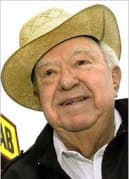
A visionary in the retail industry, Paul Orfalea founded Kinko's in 1970, transforming it into a global leader in printing and copying services with over 1,000 locations by the time he stepped down in 2000. Embracing his learning disabilities as hidden advantages, he championed the idea that understanding customers' emotional needs was essential to business success, a principle that continues to resonate with entrepreneurs today. Orfalea believed in the importance of strategic thinking over daily operations, exemplified by his spontaneous decision to invest $2 million in real estate during a property tour, while humorously prioritizing a mere dime for parking. His journey underscores the power of reframing perceived deficits into drivers of innovation and competitive advantage.
Core Principles
culture
Take the service you provide seriously, but have fun with everything else. Create a culture where work is enjoyable but never frivolous about customer value.
Paul and his partners called themselves 'capitalist hippies.' They had beers after work, went bowling, and had picnics together. They didn't take themselves seriously. But they were maniacal about the quality of what came out of the copy machines and the anxiety relief they provided customers.
“We had fun with everything else. The only thing we took serious is the service we provided to our clients.”
customer obsession
Understand that you are solving a customer's emotional problem, not just delivering a product or service.
Paul realized early that Kinko's customers were stressed and anxious about technology and deadlines. Rather than marketing copies, he marketed anxiety relief. This insight shaped every decision about customer experience, from removing hostile signage to always providing free paperclips and pens.
“We weren't so much selling copies as we were assuaging anxiety.”
Make decisions and organize your business entirely from the customer's perspective, not the operator's convenience.
Paul refused to post negative signage about bounced checks or restrict free items, even when managers complained customers were stealing paperclips. He believed the tiny percentage of lost pens was far outweighed by the intangible damage of making customers feel unwelcome. He even walked through the front door, not the employee entrance, to see how customers experienced the store.
“The occasional hit we took for a bounce check cost far less than what we lost and couldn't quantify. That's creating a subtly hostile atmosphere.”
The cost of poor customer experience is hidden, not quantifiable, and far larger than obvious expenses.
Paul observed corporate removing profitable yellow page ads for passport photos because they saw advertising as an expense rather than part of manufacturing. The business then died. Similarly, a hardware store's credit card minimum and unfriendly policies cost them a customer who immediately bought online instead.
“The occasional hit we took for a bounce check cost far less than what we lost and couldn't quantify by creating a subtly hostile atmosphere.”
Systematically gather customer feedback through suggestion boxes and read it personally, especially from the most engaged customers.
Paul used suggestion boxes and had the marketing manager and president of Kinko's Northwest read every single customer suggestion from their region for nine years. Customers motivated enough to write are revealing what can be improved.
“The customers that care enough to write you, they care enough about your business that they're going to tell you what they feel can be improved.”
finance
Design compensation structures so partners and employees have skin in the game and share profits rather than collecting salaries.
Paul gave all co-workers shares of store profits and built Kinko's on 127 different individual partnerships with varying ownership stakes. This meant everyone was motivated to protect customer relationships and reduce waste. More than 100 of his earliest co-workers and partners became millionaires, which he attributes to profit sharing.
“I didn't want to use people. I wanted coworkers who would be empowered entrepreneurs. The best way to accomplish this was by giving everyone a share of the profits from the stores.”
Master frugality and refuse to do business with people who cannot save money.
Paul and his partners would sleep in their cars to avoid hotel costs. He made it a rule never to do business with people who couldn't save money because spenders won't be cautious with their store profits and their partners' money.
“I would never do business with people who can't save money. Spenders won't be cautious with their store profits.”
focus
Simple, high-margin businesses with no inventory problems are better than complex operations, regardless of theoretical potential.
Paul deliberately sought businesses that were simple, had high margins, and required minimal inventory management. The copy business fit perfectly within his circle of competence. He believed in playing to your strengths rather than trying to do everything.
“The copy business appealed to me because it fell perfectly within my circle of competence. It's a simple business.”
innovation
Use games and play as a learning tool to understand business strategy and dynamics.
Paul learned expansion strategy from playing Risk as a kid. He realized you don't need to expand in geographic progression and don't need to respect borders. He also learned business lessons from poker and Monopoly. Games are practical simulators of real business dynamics.
“I got the idea for how to grow by playing the board game Risk when I was a kid. Playing the game taught me there was no reason to expand in a neat geographic progression.”
You can always learn the technology later. Start with solving the problem, and the mechanics will come.
Paul had no mechanical ability and could barely operate the first copier. But he understood what people needed and could sell what came out of the machine. The technical details of how to run equipment were learnable; understanding customer anxiety was not.
“I could barely run the first copier we leased back in 1970. It didn't matter. All I knew was that I could sell what came out of it.”
leadership
Avoid becoming inaccessible to solve small operational problems, as it signals that your people can't solve problems without you.
When a store manager called Paul to ask how to handle a bounced check, he held the receiver away from his face in disbelief. If every manager needed his help with routine issues, the business had structural problems. He made himself intentionally hard to reach so people would develop judgment.
“If every store manager needed my help to deal with a bounce check, then we really had problems. I made up my mind then and there I wouldn't be picking up my own phone every five minutes.”
Management is the removal of obstacles for people to do their work, not the creation of rules and procedures.
Paul's wife gave him the definition he lived by: the goal of management is to remove obstacles. This shaped how he approached leadership. He removed barriers that prevented co-workers from serving customers well, rather than adding restrictions and policies.
“My wife gave me the best definition of management I've ever heard. She said, the goal of management is to remove obstacles.”
Delegate early and aggressively to avoid being trapped in operational work that prevents strategic thinking.
From the very beginning, Paul hired people to run the original Kinko's for him while he focused on marketing and expansion. He believed that if you don't master the skill of delegation, you will be so busy that you can't get free time to think creatively about where you're heading.
“I hired people to run Kinko's for me, and I left it in their care. As a result, there was simply no way to become too bogged down by lots of busy work.”
Be on your business, not in your business. Your job is thinking strategically, not executing the busywork.
Paul deliberately stayed out of day-to-day operations and turned tedious tasks over to others. He spent only two days a week at his first store while still in college, focusing instead on marketing and observing competitors. This freed his mind for creative thinking and gave him perspective on where the business was heading.
“When your mind can break free of all that worry and clutter, you'll find yourself coming up with the most improbable and inspired ideas.”
Never let corporate headquarters override the judgment of people in the field who know the local market.
Paul observed that corporate executives sitting in offices always overrode decisions made by store operators who had direct customer contact. He deliberately defended field operators and fought against headquarters becoming a parasitic layer disconnected from reality.
“Whenever I saw managers from the head office disrespecting co-workers from the field, I defended the field. The energy in most other companies runs in exactly the opposite direction.”
marketing
Sales and marketing are not separate from operations. They are the core of understanding your customer and driving the business forward.
Paul spent minimal time behind the counter. Instead, he was always selling, handing out flyers, visiting dorm rooms, stuffing professor mailboxes, and studying how customers used the service. He identified as a peddler and believed that getting out and meeting people was more important than managing inventory.
“What I really enjoyed was getting out and meeting people. In a word: marketing. You'd be amazed what kind of business you can generate by seemingly simple things.”
Treat advertising and marketing not as a discretionary expense, but as a core part of manufacturing the product.
When corporate removed Kinko's yellow pages ads for passport photos, they killed the business. Paul saw this as fundamentally misunderstanding the cost structure. The ads were not expenses; they were production costs, like paper.
“The new budget people came in and got rid of the yellow page ads. They saw it as an advertising expense. Then, like a self-fulfilling prophecy, they abandoned the passport business.”
mindset
Protect your mind and body from burnout by working in cycles and maintaining strict time for family and personal life.
Paul worked in three-week cycles: three weeks on the road, three weeks at headquarters. He refused to be a workaholic and made sure to spend time with his family. He believed that if you're exhausted and burned out, you can't think creatively or be the leader people need.
“I'm not interested in power because power to me means having to do a lot of work. When you're not stuck working 12 hours a day, you've got time to think creatively.”
Recognize that anger, passion, and emotional intensity can drive excellence but can also become destructive. Work to manage this, not pretend it doesn't exist.
Paul spent decades letting anger and emotional extremes drive his business. He would yell at executives, throw things, and create chaos. In his late 40s, he sought help and eventually took medication. He acknowledges this was damaging to co-workers while also crediting passion as the source of his drive.
“I had a problem with anger. I'm not proud of those outbursts. The upside to my dark side is passion.”
The financial anxiety and fear of losing everything can motivate building a great business, but it can also wear you down and make you run scared.
Paul's liability at Kinko's grew to many times greater than his net worth. This fear of going broke and losing everything was a driving force for decades, but by his mid-to-late 40s, it wore him down emotionally and contributed to mental health struggles.
“For many years, despite the motivational pep talks I delivered at company meetings, I was literally running scared.”
Use vision of what you want to avoid to unstick your thinking when you're blocked on what you want to build.
When Paul couldn't figure out how to open a second store, he instead envisioned the future he wanted to avoid: himself as an old man waving from the original location. That negative visualization worked where positive planning hadn't. His dad had used similar thinking about taking time to rest.
“One particularly effective way of staying on your life is to envision the kind of future you do not want.”
Entrepreneurship is open to everyone because nobody can stop you but yourself. Value and service matter more than credentials or background.
Paul was fired from every job he had and was basically unemployable in traditional work. But he had value to offer: he could build a copy shop and sell copies. As long as you can provide value that people will pay for, you can survive and grow, regardless of your past.
“The only hope for me was to go into business for myself. As long as you have value and service you can provide to others, people were willing to pay for that value.”
operations
Develop the ability to be selectively inaccessible while still remaining reachable for things that matter.
Paul used asynchronous voicemail systems to stay available to his team without being interrupted constantly. Co-workers could record ideas that thousands would hear, and Paul could check messages without being on the phone every moment. This kept him on his business rather than in it.
“Even though I was generally inaccessible at any given moment, it was still possible to reach me.”
strategy
Be willing to work in different ways than your partners and allow them to do the same. There is no single formula for business.
One partner, Dave, wanted five-year strategic plans and multiple layers of bureaucracy while Paul thought those were pointless. Dave's policy manual was voluntarily adopted by other partners. Rather than forcing uniformity, Paul allowed different operating philosophies to coexist and spread best practices through observation.
“He thought my stores were loosely and poorly run. I repeatedly told him that he could have expanded his business 10 times faster were he not so repped up and tending to all the bureaucratic mumbo jumbo.”
Learn business by testing small ideas and doubling down on what works rather than planning everything upfront.
Paul's first store was a laboratory with four or five business lines: copies, pens, pencils, and eventually passport photos. Whichever generated the most revenue got doubled down on. He didn't write a business plan or study the market; he relied on gut instinct and rapid experimentation.
“I didn't write out a business plan or study the market, but my gut told me I could make money selling what came out of those machines.”
Travel constantly to observe what other locations are doing right, and spread best practices organically rather than mandating them.
Paul worked in cycles of three weeks on the road visiting stores and competitors, followed by three weeks at headquarters. He would observe a great inventory system in Idaho and record it on the voicemail system for all employees to hear. He intentionally avoided mandating practices because 'if I do that, this will be the best it ever is,' believing continuous improvement requires local autonomy.
“If I mandate that, this will be the best it ever is. Because if I do that, there's no room for improvement.”
Frameworks
Chief Wanderer Model
Instead of being Chief Executive, Paul was Chief Wanderer. He worked in cycles of three weeks traveling to observe stores and competitors, followed by three weeks at headquarters. This approach allowed continuous learning, prevented him from micromanaging, and created a natural experiment lab where best practices emerged organically from the field.
Use case: When you want to scale a business while maintaining culture and innovation. Allows leaders to stay connected to reality while avoiding the trap of centralized control.
Decentralized Partnership Structure
Rather than company-owned stores or traditional franchises, Kinko's operated as 127 separate individual partnerships with varying ownership stakes. Partners owned pieces of multiple stores, creating alignment across locations while allowing local autonomy in operations. Forced headquarters to work through influence rather than command.
Use case: When you want to scale rapidly while keeping entrepreneurs motivated and preventing bureaucratic bloat. Works best in businesses where local operators understand their market better than central management.
Voicemail Broadcasting System
Paul couldn't use email due to dyslexia, so he created an asynchronous voicemail system where co-workers would record best practices and innovations. All employees could listen to these messages on their own time. This allowed information to spread throughout the company without requiring synchronous communication or written documents.
Use case: For companies wanting to spread ideas without written communication. Particularly useful for organizations with diverse learning styles or accessibility needs. Creates a learning library that employees can access repeatedly.
Profit Sharing for Co-Workers
All employees received a share of profits from their store or stores they worked in. This was different from stock options or typical profit sharing. It meant every person had skin in the game and was incentivized to protect customer relationships, reduce waste, and think like an owner.
Use case: When you want to align incentives without diluting founder control. Creates entrepreneur mentality among employees and reduces the need for surveillance and rules.
Customer Perspective Door
Paul always entered stores through the customer entrance, never through the employee back door. This simple practice forced him to experience the store from the customer's point of view constantly, revealing details that operators sitting in offices would miss.
Use case: A daily practice for any business owner wanting to maintain customer obsession. Prevents executives from building mental models of the business that diverge from customer reality.
Suggestion Box System
Paul implemented suggestion boxes and had key leaders personally read every customer suggestion from their region for years. This created a direct feedback loop from the market without layers of filtering. Customers motivated enough to write were revealing improvement opportunities.
Use case: When you want to access customer intelligence that surveys and focus groups miss. Works best when leaders commit to personally reading feedback rather than delegating it away.
Negative Visioning
When Paul was stuck on how to build something, instead of planning what he wanted, he would vividly imagine the future he wanted to avoid. This unstuck his thinking in ways that positive visualization couldn't. He would then work backward from that avoided future to solve the problem.
Use case: When you're blocked on a strategic decision and normal planning isn't working. Useful for founders who think inversely or have difficulty with traditional goal-setting.
Three-Week Work Cycle
Paul worked in structured cycles: three weeks traveling to stores and observing competitors, followed by three weeks at headquarters thinking and planning. This rhythm prevented him from getting trapped in daily operations while maintaining connection to field reality.
Use case: For founders who struggle with the tension between strategic thinking and operational awareness. Creates a rhythm that allows both to happen without constant switching.
Intentional Inaccessibility
Paul made himself deliberately hard to reach so that store managers would solve problems without him. But he had systems in place to reach him when necessary. This trained the organization to develop judgment rather than dependence.
Use case: When you want to develop leadership bench strength and prevent people from becoming dependent on you. Requires systems to ensure important information still flows.
Stories
Paul took a real estate agent on a property tour, casually bought $2 million worth of real estate in 45 minutes, then spent two minutes fishing a dime out of his car to pay a campus parking fee, stomping on it before driving away. The real estate agent was confused until Paul explained the lesson: never lose money.
Lesson: Money discipline and frugality matter at every scale, from dimes to millions of dollars. Wealth is built through thousands of small careful decisions about spending, not just big business wins. The value of money doesn't change based on the total amount at stake.
When Paul was 13, the principal told his mother he should learn a trade like carpet laying instead of pursuing academics. His mother responded by saying she knew Paul could do more, and later encouraged him by saying the A students work for B students, C students run companies, and D students dedicate buildings. Paul eventually graduated with a D average and had a building named after him at UC Santa Barbara.
Lesson: External assessments of your potential can be wrong. The people closest to you matter more than institutional judgment. Confidence from family can sustain you through systems designed to make you feel like a failure. Educational performance and life success are not the same thing.
Paul was working at his father's clothing factory and asked his aunt if he could switch from buttoning dresses to assembling orders for customers. She shouted at the man helping him, Don't let him do that, he can't even read. Paul walked to his car and cried for hours, realizing that trying to please others wasn't possible with his skill set, so he might as well try to please himself.
Lesson: Rejection can clarify your purpose. When you realize you can't succeed by conventional standards, you're forced to find your own path. The same limitation that gets you rejected from one path might be the thing that makes you exceptional at another.
Paul was fired from every job he had: ice cream, gas station, newspaper delivery, painting. He concluded he was basically unemployable and decided to go into business for himself. This forced him to discover that what he was good at (selling and understanding customers) didn't require any of the skills that traditional employers valued.
Lesson: Being fired from multiple jobs is not failure if it clarifies that employment isn't your path. Entrepreneurship is open to people who don't fit in traditional roles. Your deficits in one context can be irrelevant in another.
Paul saw a professor anxious about copy machines at the university copy center during the Charles Manson trial media frenzy. He realized immediately that people didn't want copies, they wanted anxiety relief. Two hours away at UCSB, there were no copy centers for students. He didn't write a business plan. He rented a 100-square-foot storefront for $100/month and started Kinko's.
Lesson: The best business ideas come from observing a specific customer pain point, not from market research or business plans. Speed matters more than planning. A simple idea executed well beats a perfect plan executed slowly.
Paul filled his first store with multiple small business lines: copies, pens, pencils, passport photos. He tracked which generated the most revenue and doubled down on copies. He also hired students to go door-to-door selling pens and advertising Kinko's. When a form of guerrilla marketing produced results, he expanded it.
Lesson: Use your first location as an experiment lab. Test multiple revenue streams and let the market tell you what works. Simple, direct marketing (flyers, door-to-door, professors' mailboxes) generates more business than most people expect.
A store manager posted a hostile sign warning customers about bounced check fees. Paul jumped on the counter and ripped it down in front of customers and staff. He explained that the occasional bad check cost far less than the intangible damage of creating a hostile atmosphere for anxious customers.
Lesson: Understand the true cost structure of customer experience. Hidden costs of being uninviting are larger than obvious costs of giving free pens or absorbing occasional bad checks. The way customers feel matters more than protecting yourself from every edge case.
A hardware store refused to let a customer pay for $3.50 of supplies with a credit card, requiring cash instead. The customer left empty-handed and ordered on Amazon instead, never returning. The store owner didn't know or couldn't quantify how their strict policy was losing business.
Lesson: Business rules and policies have hidden costs. Most business failures are due to easily avoidable incompetence that comes from not thinking about customer experience. A simple yes is almost always better than a complicated no.
Dave, one of Paul's partners, was in the hospital fighting leukemia with no immune system when Paul called him asking about profit and loss statements. Dave had written letters to his children, thinking he would die. Paul didn't know what to say and operated like a rhinoceros, unable to read the situation.
Lesson: Context and emotional intelligence matter. Even brilliant operators can be socially inept. This story illustrates the dark side of Paul's intensity and his later recognition that he needed mental health support. Great operators can still cause collateral damage.
Mark Madden, one of Paul's CEOs, sent Paul a voicemail message saying, hey Paul, fuck you, after Paul had sent him three personal attack voicemails. Mark expected to be fired. Paul called back and said the passion was great, told Mark not to do it again, then let it go. Paul respected people who stood up to him with genuine passion.
Lesson: Passion and standing up to authority can be respected if it comes from genuine conviction. People who challenge a volatile leader directly sometimes earn respect. Context and tone matter in how confrontation is received.
Notable Quotes
“I'm in good company. All of these innovators survived an educational system determined to make them feel like failures.”
Discussing how many successful founders (Branson, Schwab, Kamprad, etc.) had learning disabilities similar to his dyslexia, yet became exceptional entrepreneurs.
“We weren't so much selling copies as we were assuaging anxiety.”
Explaining his core insight about what Kinko's customers actually wanted: anxiety relief, not just documents reproduced.
“When your mind can break free of all that worry and clutter, you'll find yourself coming up with the most improbable and inspired ideas.”
Explaining why he delegated busywork and stayed on his business rather than in it.
“The occasional hit we took for a bounce check cost far less than what we lost and couldn't quantify by creating a subtly hostile atmosphere.”
After tearing down a negative sign at a store, explaining why being welcoming to anxious customers was worth absorbing losses from edge cases.
“I hired people to run Kinko's for me, and I left it in their care. As a result, there was simply no way to become too bogged down by lots of busy work.”
Describing how he stayed out of operations from the very beginning, working only two days a week at his original store while still in college.
“If I mandate that, this will be the best it ever is. Because if I do that, there's no room for improvement.”
When asked why he didn't mandate a great workflow system he observed across all stores, explaining his belief in continuous experimentation.
“I didn't want to use people. I wanted coworkers who would be empowered entrepreneurs. The best way to accomplish this was by giving everyone a share of the profits from the stores.”
Explaining his philosophy of profit sharing and why he rejected the word employee.
“We had fun with everything else. The only thing we took serious is the service we provided to our clients.”
Describing the culture of capitalist hippies who didn't take themselves seriously but were maniacal about customer service.
“If every store manager needed my help to deal with a bounce check, then we really had problems. I made up my mind then and there I wouldn't be picking up my own phone every five minutes.”
Explaining why intentional inaccessibility was critical to developing judgment in his team.
“I didn't write out a business plan or study the market, but my gut told me I could make money selling what came out of those machines.”
Describing how he started Kinko's without formal planning, relying instead on intuition and observation.
Frequently Asked Questions
What are Paul Orfalea's key business principles?▼
Paul Orfalea's core principles include: Take the service you provide seriously, but have fun with everything else. Create a culture where work is enjoyable but never frivolous about customer value.. Understand that you are solving a customer's emotional problem, not just delivering a product or service.. Make decisions and organize your business entirely from the customer's perspective, not the operator's convenience.. Founder Almanac has cataloged 30 total principles from Paul's career.
What can entrepreneurs learn from Paul Orfalea?▼
Key lessons from Paul Orfalea include: Money discipline and frugality matter at every scale, from dimes to millions of dollars. Wealth is built through thousands of small careful decisions about spending, not just big business wins. The value of money doesn't change based on the total amount at stake.. Explore 10 stories and 9 frameworks from Paul's experience.
What is Paul Orfalea known for in business?▼
A visionary in the retail industry, Paul Orfalea founded Kinko's in 1970, transforming it into a global leader in printing and copying services with over 1,000 locations by the time he stepped down in 2000. Embracing his learning disabilities as hidden advantages, he championed the idea that understanding customers' emotional needs was essential to business success, a principle that continues to resonate with entrepreneurs today. Orfalea believed in the importance of strategic thinking over daily operations, exemplified by his spontaneous decision to invest $2 million in real estate during a property tour, while humorously prioritizing a mere dime for parking. His journey underscores the power of reframing perceived deficits into drivers of innovation and competitive advantage.
More Retail Founders
Want Paul's advice on your business?
Our AI has studied Paul Orfalea's biography, principles, and decision-making frameworks. Ask any business question.
Start a conversation