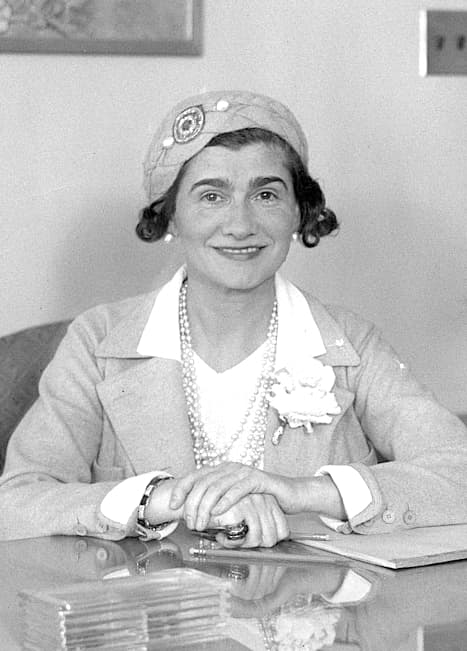
Coco Chanel
House of Chanel
Born into poverty and orphaned at a young age, Coco Chanel transformed her challenging beginnings into a driving force for her groundbreaking career in fashion. She founded the House of Chanel, revolutionizing women's fashion with her iconic designs, including the timeless Chanel No. 5 perfume and the classic Chanel suit. Chanel believed that financial independence was key to self-determination, a principle that guided her entrepreneurial journey. By relentlessly simplifying her designs and processes, she distinguished herself from competitors, ultimately establishing a brand that remains synonymous with elegance and innovation. Her legacy endures, serving as an inspiration for entrepreneurs who value authenticity and differentiation in their pursuits.
Core Principles
customer obsession
Understand the psychology of luxury consumers. They will pinch pennies on necessities but bankrupt themselves for things they desire but do not need.
Chanel observed wealthy customers and noticed they haggled over practical purchases but spent lavishly on fashionable or status items. She used this insight to set prices and positioning for her products, knowing her wealthy customers would pay premium prices for items that conveyed status and exclusivity.
“They would pinch pennies over necessities and bankrupt themselves for rivalities.”
innovation
Turn constraints into competitive advantages. When restrictions prevent you from doing something one way, find an alternative approach that becomes your innovation.
Chanel could not legally manufacture full dresses due to exclusivity agreements in her building, so she used jersey fabric instead, which competitors dismissed as unsuitable. This constraint forced her to innovate and ultimately became the foundation of her signature style.
marketing
Build your own myth and narrative deliberately. What people believe about you and your brand matters more than objective truth in luxury markets.
Chanel was a compulsive fabricator of stories about her own life. She created an invented biography that aligned with her desired brand identity. While this would be destructive in other contexts, in high fashion it actually enhanced her mystique and the allure of her creations.
“Those on whom legends are built are their legends. That was why she devoted so much care to the construction of the Chanel myth.”
Use media and influencers to build your brand legend. Create stories that turn customers into participants in your narrative, not just buyers.
Chanel cultivated relationships with actresses and society figures who were featured in Vogue and Harper's Bazaar. When prominent people wore her designs, media coverage followed. She framed customers as privileged characters incorporated into the Chanel legend, making the purchase about status and belonging rather than just clothing.
“When my customers come to me they like to cross the threshold of some magic place. For them, that is a far greater pleasure than ordering another suit.”
mindset
Superior talent isolates you from ordinary people. Embrace solitude as the cost of excellence and choose your relationships carefully.
Chanel lived a solitary life, especially in her final decades. She recognized that her superiority in taste and creation set her apart, making it difficult to find companions who understood her work. Rather than compromise, she accepted this isolation as necessary.
“Of necessity, superiority isolates one. It compels one to choose one's friendships and one's relationships.”
Money equals independence and control. Pursue financial resources as the primary vehicle for self-determination, not as an end goal itself.
Chanel grew up in poverty and watched peasant girls earn money to escape their circumstances. She internalized that earning her own money was the only path to freedom from dependence on men or family. She repeatedly chose work over relationships when they threatened her autonomy.
“I've never been interested in money, but I was concerned with independence.”
Overconfidence in your abilities, even when your circumstances suggest otherwise, is a competitive advantage. Belief precedes evidence.
Chanel had abundant self-confidence despite being a poor orphan with no financial resources or family connections. She believed in her capabilities when no external evidence supported it. This unshakeable confidence drove her to attempt things others would never try.
“I have nothing and I know I can do anything.”
Focus obsessively on your work, not on personal happiness or relationships. The work itself becomes the source of meaning and fulfillment.
Chanel acknowledged she did not know if she had ever been happy, yet she continued designing until the day she died at 87. She sacrificed personal relationships, companionship, and comfort for the pursuit of creation. She found true happiness only in her work and the House of Chanel.
“I've had no time for living. I don't even know whether I've been very happy.”
operations
Be resourceful and strategic about what you can control. Work within constraints creatively rather than waiting for ideal conditions.
Chanel did not have capital, family connections, or formal training. Instead, she bought inexpensive hats, added simple improvements, and resold them at high margins. She observed wealthy customers, identified their psychology, and positioned her products accordingly. Every constraint forced her to think creatively.
product
Be deliberately different from competitors, not necessarily better. Differentiation itself is a competitive advantage that attracts attention and builds brand.
Chanel made hats and dresses that looked nothing like what competitors were producing. She adapted men's jersey fabric for women's clothing because of manufacturing restrictions, but this constraint became her signature. Her uniqueness drew high-society customers who wanted to be seen with her creations.
“I saw myself as very different from the rest.”
resilience
Recognize that your childhood deprivation and humiliation, while painful, can fuel extraordinary drive. Transform pain into purpose.
Chanel's traumatic childhood, marked by poverty, abandonment, and shame, created an insatiable drive for independence and success. Her humiliation at being a charity case motivated her to prove herself superior. She deliberately weaponized her past to fuel her ambition.
“Humiliation, a mother whom people pitied because we were really poor, a father who did not send the money that he ought to have sent. People who whispered about these things when they came to visit.”
Continue creating and innovating regardless of external circumstances. Control what you can control, your output and effort, not outcomes.
When World War II began, Chanel closed her fashion house thinking the war would devastate demand. She later regretted this decision, realizing others continued producing despite the crisis. She learned that she should focus on her work and adapt to new realities rather than stop entirely.
“Whatever may happen hereafter, I'll go on making my clothes. The only thing I still believe in is my work.”
simplicity
Simplify your designs and process relentlessly. Every day, identify one thing to simplify as you learn more about your craft.
Chanel consistently removed unnecessary elements from women's fashion. She eliminated heavy corsets, excess ornamentation, and impractical designs. Her approach was to transpose masculine simplicity into feminine form, creating elegant, wearable clothing rather than costume pieces.
“Every day I simplify something because every day I learn something.”
strategy
Leverage the resources and networks of wealthy people around you to bootstrap your business. Use relationships strategically without becoming dependent.
Chanel lived with wealthy lovers who introduced her to high society and provided access to distribution channels. She placed her hats and clothing with actresses and socialites who wore them publicly. This provided free marketing and credibility without requiring capital investment. She maintained independence by developing her own business parallel to these relationships.
Be calculating and ruthless in negotiations. Never settle for unfavorable terms when you have leverage. Fight for what you deserve.
Chanel's lawyers urged her to settle with the Wertheimer brothers for less than she wanted. Instead, she chose litigation and created competing products to force better terms. Her persistence resulted in a settlement worth millions annually plus lifetime expense coverage, making her one of the richest women in the world.
“I want my revenge. It's got to be all or nothing.”
Never give up control of your core business and brand. Independence is more valuable than short-term financial gains from partnerships.
Chanel negotiated fiercely to maintain control of her perfume business after initially ceding too much power to the Wertheimer brothers. Rather than accept unfavorable terms, she threatened to create competing products and leveraged her distribution network to force renegotiation.
“I've never wanted to give up the house of Chanel, which is the only thing that's mine in which no one else had any part.”
Frameworks
Myth Construction for Brand Building
Deliberately create and maintain a narrative about yourself and your brand that aligns with your desired market positioning. Control the stories told about you and ensure consistency in media messaging. Use mystery and carefully crafted details to create allure. This works especially well in luxury markets where perception drives value more than functional attributes.
Use case: Luxury goods, fashion, personal branding, companies seeking to build premium positioning
Constraint Inversion
When faced with limitations that prevent your preferred approach, reframe the constraint as an opportunity to innovate differently. Identify what the constraint prevents you from doing, then find an adjacent alternative that becomes your unique signature. This forces differentiation while solving the original problem.
Use case: Early stage companies with limited resources, regulatory environments, competitive markets where direct competition is difficult
Leverage Extraction
Map the networks and resources available through relationships with wealthier or more connected people. Identify specific ways their access and credibility can accelerate your business without creating financial dependency. Use their patronage and introductions as a bootstrapping mechanism while building parallel independence.
Use case: Startup phase, entering new markets, building initial credibility and distribution
Adversarial Renegotiation
When facing unfavorable contract terms that you signed earlier, create competing alternatives that threaten the other party's revenue. Use this leverage to force renegotiation rather than accepting their dismissal of your grievances. Take the fight to court as a credible threat even if you prefer settlement.
Use case: Mature businesses in disputes with partners, licensing agreements, revenue-sharing disputes
Stories
Chanel grew up as a poor orphan after her mother died of tuberculosis when she was six and her father abandoned the family. She was placed in a reform school as a charity case, where she felt humiliated and inferior. This early trauma instilled in her an intense desire to escape poverty and prove her superiority.
Lesson: Childhood pain and humiliation, when channeled properly, can become powerful fuel for ambition and drive. Your biggest insecurities can become your greatest motivators if you refuse to accept them as your destiny.
At 20 years old, Chanel lived as a kept woman with a wealthy man who brought her to Paris. When he could no longer support her independence, she declared to him: 'I have nothing and I know I can do anything. You have everything and you don't do anything with it.' She left him to build her own business, using only her skills and resourcefulness.
Lesson: External resources and privilege do not guarantee success. Self-belief combined with determined action outperforms inherited advantage. Strip away excuses and dependencies to unlock your true capability.
Chanel was legally prevented from making full dresses due to exclusivity agreements in her building. Rather than compete directly, she used jersey fabric (previously used only for men's clothing in England) to create a new category of women's clothing. This constraint forced her to innovate differently and became her signature style that competitors could not replicate.
Lesson: Constraints force creativity. The limitations you face may contain the seeds of your greatest competitive advantage if you approach them as opportunities rather than obstacles.
After 23 years of unfavorable partnership with the Wertheimer brothers on perfume sales, Chanel decided to fight. When their lawyers urged settlement, she refused and instead created competing perfumes and leveraged her retail relationships to distribute them. She forced the Wertheimers to renegotiate, ultimately securing $9 million in back payments and $25 million in annual royalties, plus lifetime expense coverage.
Lesson: Never accept being cheated. Calculate your actual leverage, create credible alternatives, and be willing to fight rather than accept unfair terms. The cost of litigation is often less than the cost of accepting an unjust arrangement.
Chanel recognized that wealthy customers haggle over necessities but willingly bankrupt themselves for items they desire but do not need. She observed their psychology and positioned her hats and dresses not as practical clothing but as status symbols and participation in her legend. This insight drove her pricing and marketing strategy.
Lesson: Understand the true psychology of your premium customers. They are not buying functionality, they are buying status, belonging, and identity. Price and position accordingly.
During World War II, Chanel closed her fashion house believing the war would devastate demand for luxury clothing. She later deeply regretted this decision after learning that competitors continued producing and profiting throughout the war. She recognized that by stopping entirely, she had let circumstances beyond her control dictate her choices.
Lesson: Control what you can control: your effort, your output, your improvement. Do not let external crises become excuses to stop creating. Adapt to new conditions but do not abandon your core work.
Notable Quotes
“I'm very pleased, as you see. There was no big audience, but the people who did come really understand work done well. No one pays me compliments anymore simply to please me. It's my work that I'm congratulated on. And to me, that's the only thing that counts.”
Reflecting on her life at age 71, explaining that she cares only about recognition for the quality of her work, not for herself as a person.
“I don't even know whether I've been happy.”
When asked about her life victories at age 75, she expressed that despite all her success, she questioned whether she had experienced happiness.
“Every day I simplify something because every day I learn something. When I can no longer create anything I'll be done for.”
Describing her daily practice and her belief that creation and continuous improvement are essential to her existence.
“Only truth has no frontiers. There's only one thing about which I am still curious: death.”
One of her philosophical maxims about truth and her singular remaining curiosity late in life.
“Those on whom legends are built are their legends.”
Explaining why she devoted so much care to constructing the Chanel myth, acknowledging that her narrative identity mattered as much as her actual history.
“I am no longer what I was. I will remain what I have become.”
A philosophical statement about identity and self-creation, suggesting she deliberately shaped who she became.
“I've never been interested in money, but I was concerned with independence.”
Clarifying that her drive for wealth was instrumental, a means to achieve independence, not an end goal in itself.
“I have nothing and I know I can do anything. You have everything and you don't do anything with it.”
Confronting a wealthy lover who wanted her to remain dependent, asserting that her lack of resources was no barrier to her capability.
“I saw myself as very different from the rest.”
Explaining her early recognition that she was fundamentally different from the people around her and this difference was her advantage.
“When my customers come to me they like to cross the threshold of some magic place. They are privileged characters who are incorporated into our legend. For them, that is a far greater pleasure than ordering another suit.”
Describing how she positioned her brand as an experience and an identity rather than just a product, making customers feel part of a special community.
Frequently Asked Questions
What are Coco Chanel's key business principles?▼
Coco Chanel's core principles include: Understand the psychology of luxury consumers. They will pinch pennies on necessities but bankrupt themselves for things they desire but do not need.. Turn constraints into competitive advantages. When restrictions prevent you from doing something one way, find an alternative approach that becomes your innovation.. Build your own myth and narrative deliberately. What people believe about you and your brand matters more than objective truth in luxury markets.. Founder Almanac has cataloged 16 total principles from Coco's career.
What can entrepreneurs learn from Coco Chanel?▼
Key lessons from Coco Chanel include: Childhood pain and humiliation, when channeled properly, can become powerful fuel for ambition and drive. Your biggest insecurities can become your greatest motivators if you refuse to accept them as your destiny.. Explore 6 stories and 4 frameworks from Coco's experience.
What is Coco Chanel known for in business?▼
Born into poverty and orphaned at a young age, Coco Chanel transformed her challenging beginnings into a driving force for her groundbreaking career in fashion. She founded the House of Chanel, revolutionizing women's fashion with her iconic designs, including the timeless Chanel No. 5 perfume and the classic Chanel suit. Chanel believed that financial independence was key to self-determination, a principle that guided her entrepreneurial journey. By relentlessly simplifying her designs and processes, she distinguished herself from competitors, ultimately establishing a brand that remains synonymous with elegance and innovation. Her legacy endures, serving as an inspiration for entrepreneurs who value authenticity and differentiation in their pursuits.
More Fashion & Luxury Founders

Want Coco's advice on your business?
Our AI has studied Coco Chanel's biography, principles, and decision-making frameworks. Ask any business question.
Start a conversation