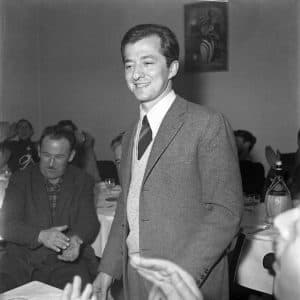
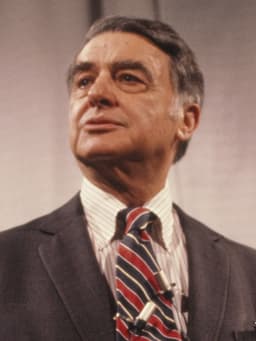
Leonardo Del Vecchio
Luxottica
A visionary in the Fashion & Luxury industry, Leonardo Del Vecchio founded Luxottica, which became the world's largest eyewear company, generating over €9 billion in revenue by 2020. His relentless commitment to product excellence over price competition allowed Luxottica to command premium margins and redefine industry standards. Del Vecchio emphasized the importance of investing in cutting-edge technology and automation, ensuring that Luxottica maintained a competitive edge through superior craftsmanship. With a focus on vertical integration, he eliminated intermediaries, capturing larger profit margins while gaining complete control over the business. As he once stated, "If you want to stay in the market, you must always seek perfection," reflecting his belief in striving for excellence in every aspect of business.
Core Principles
competitive advantage
Build high barriers to entry through patents, proprietary technology, and exclusive relationships to prevent competitors from eroding your position.
Del Vecchio systematically acquired patents, licensed exclusive relationships with fashion houses, and controlled distribution channels. When he learned a competitor owned a valuable patent on elastic hinges, he bought their entire company to control that single technology. These barriers made it nearly impossible for competitors to replicate his business model.
finance
Use leverage and financing strategically to acquire companies larger than yourself, then immediately sell off non-core assets to service debt.
Del Vecchio executed a hostile takeover of US Shoe, a conglomerate 5 times larger than Luxottica, by raising debt financing and offering a 1.4 billion dollar price. Once he controlled the assets, he stripped away everything except Lenscrafters (which he wanted), using the proceeds to pay down acquisition debt. This bold use of leverage allowed a smaller company to dominate a larger competitor.
focus
Build a business around one singular, powerful ambition relentlessly pursued, rather than diversifying into multiple ventures.
Del Vecchio's entire 60-year career was obsessively focused on one goal: dominating the eyewear industry. He did not pursue other industries or ventures. This singular focus, compounded over decades with reinvested profits and acquisitions, created an empire with no equal. His famous statement was simply: 'I want to be the best at everything I do. That is all.'
“I want to be the best at everything I do. That is all.”
innovation
Use recording devices or journaling to capture ideas that emerge at unusual times, as innovation often strikes outside formal work hours.
Del Vecchio kept a tape recorder by his bed because he would wake in the middle of the night with solutions to problems or ideas for business expansion. Rather than lose these insights, he would record them immediately and return to sleep. This practice ensured that creative breakthroughs occurring at odd hours were not lost and could be acted upon the next day.
leadership
When stepping away from leadership, ensure the company stays true to your original vision or return to run it yourself, do not accept mediocrity.
Del Vecchio handed control to CEO Andrea Guerrero at age 70, hoping to retire. Within a few years, Guerrero refused to pursue the transformational Essilor merger that Del Vecchio saw as essential to Luxottica's future survival. Del Vecchio, now 79, fired Guerrero and returned to full control to execute the vision he believed was necessary. He refused to let his life's work be diluted.
Maintain absolute operational control by staying deeply connected to the factory floor, not retreating to corporate offices.
Del Vecchio never worked from his office. He was always on the factory floor, checking machinery for dust, explaining processes directly to workers, observing new designs weekly. Even in his 80s, he would obsessively monitor sales data for 1,500 individual sales representatives. This hands-on leadership allowed him to catch problems others missed and maintain cultural alignment.
“I'm always around the factory. I talked directly with everyone explaining why and how we do things this way.”
marketing
Transform a commodity product into a premium fashion item by associating it with high-end brands and raising quality standards dramatically.
Del Vecchio signed a licensing deal with Giorgio Armani in 1988, which transformed glasses from medical devices into fashion statements. Ray-Ban, which had been selling aviators at gas stations for $19, was repositioned as luxury eyewear. He increased the lacquer layers on Wayfarers from 2 to 31. This strategy allowed Luxottica to command 10-30x production cost as retail price.
“Moving towards sunglasses follows the same logic that Leonardo had adopted a decade earlier when he ventured with Armani into the world of designer glasses to target segments where competition is not on price but on product and service.”
mindset
Never rest on achievements, maintain insatiable ambition to prevent competitors from taking what you have built.
Del Vecchio was driven by a deep fear that someone better would come along and take everything from him. He stepped down once to let another CEO run the company and became deeply unsatisfied, quickly returning to control. He worked until age 87, always looking for the next expansion. This relentless mindset prevented the complacency that destroyed many of his competitors.
“If you get distracted or rest on your laurels, someone comes along to snatch your market away from you. I never got tired of moving forward.”
Develop deep expertise in your business from the ground level, knowing every detail from raw materials to customer, so you can outcompete generalists.
Del Vecchio started as a metal engraver, learning to engrave designs on eyeglass temples. This foundation meant he understood materials, production tolerances, and quality standards that competitors educated in business schools never grasped. When he negotiated with Metal Flex partners, he had learned every detail of their customer base while working there, which gave him leverage they did not see coming.
“If you know your business from A to Z, there's not a problem you can't solve.”
Trust your own judgment and calculations over expert consensus, especially when others dismiss your decisions as irrational.
When Del Vecchio bought Ray-Ban for 645 million dollars, every other bidder thought he was insane. They were offering 300-400 million, claiming he overpaid. He simply calculated annual volume, production cost, and selling price, then made an offer based on math. He was right. Ray-Ban became the most valuable optical brand in the world, generating over 2 billion in annual sales.
“They could not understand that. And he was right. He now sells more than 10 times the amount of Ray Bans as when he bought the company.”
operations
Monitor financial details obsessively and watch every penny, but offset this with aggressive investment in growth and technology.
Del Vecchio kept a coin on his desk engraved with 'every euro saved is another euro in profit.' He would check factories for dust and tolerated zero waste. Simultaneously, he would immediately spend whatever was needed for new machinery, research, and competitive advantage. This balance between frugality in operations and boldness in investment created compounding growth.
“I have a respect for money and the effort required to make it.”
product
Build your entire business strategy around product excellence, not price competition, to command premium margins.
Del Vecchio discovered that his eyeglass frame customers valued quality far more than price. Instead of competing on cost, he obsessed over perfection in production, which allowed him to charge higher prices and maintain fat profit margins. When he bought Ray-Ban, a failing brand, he raised prices by 30x while improving quality, proving customers will pay for excellence.
“When my clients were ordering new molds for eyeglass temples, they were not so much interested in the product's price as in the quality and in the fact that the molds were made to perfection.”
Maintain relentless focus on continuous product improvement, iterating designs and processes weekly, never allowing complacency in quality.
Del Vecchio would insist on reviewing every new design every week. He would run a finger across factory machinery checking for dust. This obsession with incremental improvement, sustained over decades, created a widening quality gap between Luxottica and competitors. The discipline of weekly review prevented the slow degradation that killed many of his rivals.
“You have to do things well, then better and then always better. Innovation has to be continuous.”
resilience
Recognize that poverty in childhood creates an advantage if it teaches relentless work ethic and eliminates complacency, as ease kills ambition.
Del Vecchio's orphanage upbringing installed a work ethic and hunger that never left him. While peers who became successful were satisfied after achieving comfort (a house by the sea), Del Vecchio viewed comfort as death to ambition. His childhood poverty became his greatest competitive advantage because he could never be satisfied, never stop working, and always saw opportunity to grow larger.
“My passion has always been the factory.”
simplicity
Simplify complex decisions by returning to first principles calculations: volume times cost plus margin equals value.
When evaluating the Ray-Ban acquisition, other bidders got lost in complex valuations and market analysis. Del Vecchio grabbed a sheet of paper and asked three simple questions: annual volume, production cost per unit, and selling price. He multiplied these figures together to arrive at his valuation. This elegant simplicity cut through noise and allowed him to see truth others missed.
strategy
Go public on the largest possible stage, not the nearest one, to maximize credibility and access to capital for future acquisitions.
When Luxottica was ready to go public, experts told Del Vecchio to list on the Milan stock exchange. Instead, he listed on the New York Stock Exchange, an almost unheard of move for a mid-sized Italian business. This decision generated an estimated 100 million dollars in free advertising and laid the groundwork for his American acquisitions, proving the power of choosing the bigger stage.
“If you have to sail, it's better to choose the big C rather than the small one.”
Seek quality over price when evaluating partners and suppliers, then eventually acquire the best ones to control them completely.
Del Vecchio identified Mr. White as the best distributor in America and pursued him for years until finally winning a partnership. Years later, when Luxottica was stronger, he simply bought the entire distribution company. This pattern repeated throughout his career: identify excellence, partner with it, then acquire it when leverage favored him.
Vertically integrate to eliminate intermediaries and capture larger profit margins while gaining total control of your business.
Del Vecchio systematically moved from subcontracting metal parts to manufacturing complete frames, to owning distribution networks, to operating retail stores, to acquiring lens manufacturers. Each integration increased his margins and control. By owning everything from raw materials to customer touchpoints, he captured value others were forced to surrender.
“I produce the semi finished goods necessary to make the glasses. Why give this advantage to the final assembler, I can do everything in house. Why should I allow others to benefit from my expertise?”
Use hostile acquisitions and aggressive tactics without regard for relationships if necessary to gain strategic assets you need to dominate.
Del Vecchio executed a hostile takeover of US Shoe despite its board's opposition. When Oakley refused to lower prices after Luxottica bought Sunglass Hut, he delisted them from his retail chain, crushed their stock price, and then bought them for 2.1 billion. These brutal tactics shocked competitors but reinforced his dominance and prevented others from challenging him.
“We will never be friends.”
Invest heavily in technology and automation as a competitive advantage, never compromise on cutting-edge equipment regardless of cost.
Del Vecchio believed profits must first be reinvested into research and development, automation, and technology. He would immediately purchase new machinery rather than delay upgrades. This reinvestment strategy compounded over 60 years, giving Luxottica insurmountable advantages in production speed and quality that competitors could not match.
“Never skimp when it comes to spending to be at the cutting edge. It has always been like this. If there is a new machine to buy, he wants it immediately.”
Frameworks
Quality as Survival Strategy
Rather than competing on price, identify an industry segment where customers will pay premium prices for superior quality. Build competitive advantage through relentless obsession with product excellence that competitors cannot match. Use this quality advantage as leverage to negotiate with partners, acquire competitors, and maintain high margins. This creates a compounding loop where higher margins fund better technology and quality, widening the gap.
Use case: When entering competitive markets where you lack scale or capital, but can achieve superior execution
Vertical Integration March
Systematically identify and eliminate all intermediaries between your business and the end customer. Begin by controlling your core product, then acquire distribution, then retail, then raw materials, then complementary products. Each integration increases profit margin, customer insight, and competitive moat. Execute this methodically over decades rather than all at once.
Use case: For businesses where end-to-end control creates measurable competitive advantages and higher margins
The Leverage Acquisition
Identify a valuable asset owned by a larger competitor. Use debt financing and strategic assumptions about cash flow to make an offer larger companies cannot justify. Upon acquisition, immediately sell non-core assets to service debt, leaving only the asset you wanted. This allows smaller, hungrier companies to acquire larger, slower ones.
Use case: For disciplined leaders ready to use significant leverage to acquire strategic assets
Fashion Transformation
Convert a commodity product into a premium fashion item by partnering with luxury brands, raising quality standards dramatically, and repositioning the item as a statement of taste rather than a functional good. This allows 10-30x markups. Requires controlling the retail environment so you can present the product at premium price points.
Use case: For mature commodity products with potential fashion or lifestyle applications
Stories
At age seven, Del Vecchio's mother, unable to care for him while working in a factory, placed him in an orphanage for seven years. The orphanage had strict rules: wake at 6 a.m. shirtless even in January, precise schedules, relentless work, and constant messaging that perseverance and quality matter more than talent. Multiple children from this same orphanage went on to build dominant companies in their respective fields.
Lesson: Childhood hardship and discipline, when coupled with access to quality mentorship and skilled trades, can create individuals with unmatched work ethic and competitive hunger that lasts a lifetime.
At 14, Del Vecchio started as a metal engraver at a factory that sent him to night school for drawing and engraving. One day, he was handed an aluminum eyeglass frame and asked to engrave decorations. This was the first time he touched the object that would consume his entire life. He realized immediately he was exceptionally good at the work, that his work required no corrections, and that this feeling of excellence was addictive.
Lesson: The moment you recognize you are exceptional at something, and you receive immediate market validation (new orders, no returns), lock in relentlessly and build your entire life around it.
Del Vecchio's partners at Metal Flex pulled his credit line, convinced he could not survive without them. He called his employees together, tears in his eyes, explained the crisis, but refused to surrender. His employees all stayed. He then went bank to bank until a bank extended him credit, bought out his partners who had dismissed him, and took full control. He later took most of their customers.
Lesson: Competitors who underestimate your hunger, desperation, and ingenuity will overplay their hand. When they do, strike with relentless focus and eliminate them completely.
Del Vecchio calculated the Ray-Ban acquisition using a simple formula: annual volume times production cost times selling price equals value. Other bidders offered 300-400 million. They told him his 645 million offer was insane. He ignored them. Ray-Ban became the most valuable optical brand in the world, generating over 2 billion in annual sales.
Lesson: Ignore expert consensus when your first principles calculations show a different truth. Calculate from ground truth, trust the math, and act with conviction even when ridiculed.
At age 79, after stepping aside for a younger CEO, Del Vecchio returned to full control because he believed the new CEO did not understand that the Essilor merger was essential to Luxottica's future. He executed the 50 billion euro merger himself, structuring it so that despite appearing equal, his controlling stake would dominate after three years.
Lesson: Never fully delegate control of a business you founded if you lack confidence in the successor's vision. Return to lead if the business drifts from its purpose.
Notable Quotes
“If you want to stay in the market, you must always seek perfection. And it's not perfection as a disease, not as an abstract ideal to refer to, but perfection as a fact.”
Defining his obsession with quality not as an abstract ideal but as a practical competitive necessity
“I realized I was good. Because when I delivered my finished work, I immediately got new orders and never had to make changes. Even though I was young, I realized that I had something more than my competitors.”
Describing his early realization as a young craftsman that he possessed exceptional skill and competitive advantage through quality
“Appetite comes with eating.”
Explaining how his ambition grew with each success, comparing his insatiable hunger for dominance to Napoleon's experience
“It is forbidden to get distracted, to rest on one's laurels, to be complacent, to enjoy success and personal achievement.”
Expressing his extreme refusal to ever feel satisfied or secure, driving his relentless pursuit of growth
“The company is my life.”
Describing his willingness to arrive at the factory at 5 or 6 a.m. and stay until midnight, treating the business as inseparable from his identity
“If you get distracted or rest on your laurels, someone comes along to snatch your market away from you.”
Warning about the dangers of complacency and explaining the urgency that drove his continuous growth
“I'm always around the factory. I talked directly with everyone explaining why and how we do things this way.”
Describing his hands-on leadership approach where he spent nearly all time on the factory floor teaching, not in offices
“They could not understand that. And he was right.”
Regarding his 645 million dollar Ray-Ban acquisition that critics said was irrational but which proved to be one of his greatest investments
“When my clients were ordering new molds for eyeglass temples, they were not so much interested in the product's price as in the quality and in the fact that the molds were made to perfection.”
Identifying that customers valued quality over price, which became his core strategic principle
“I never got tired of moving forward.”
Contrasting himself with peers who became satisfied after achieving material comfort, explaining his refusal to stop growing
Frequently Asked Questions
What are Leonardo Del Vecchio's key business principles?▼
Leonardo Del Vecchio's core principles include: Build high barriers to entry through patents, proprietary technology, and exclusive relationships to prevent competitors from eroding your position.. Use leverage and financing strategically to acquire companies larger than yourself, then immediately sell off non-core assets to service debt.. Build a business around one singular, powerful ambition relentlessly pursued, rather than diversifying into multiple ventures.. Founder Almanac has cataloged 20 total principles from Leonardo's career.
What can entrepreneurs learn from Leonardo Del Vecchio?▼
Key lessons from Leonardo Del Vecchio include: Childhood hardship and discipline, when coupled with access to quality mentorship and skilled trades, can create individuals with unmatched work ethic and competitive hunger that lasts a lifetime.. Explore 5 stories and 4 frameworks from Leonardo's experience.
What is Leonardo Del Vecchio known for in business?▼
A visionary in the Fashion & Luxury industry, Leonardo Del Vecchio founded Luxottica, which became the world's largest eyewear company, generating over €9 billion in revenue by 2020. His relentless commitment to product excellence over price competition allowed Luxottica to command premium margins and redefine industry standards. Del Vecchio emphasized the importance of investing in cutting-edge technology and automation, ensuring that Luxottica maintained a competitive edge through superior craftsmanship. With a focus on vertical integration, he eliminated intermediaries, capturing larger profit margins while gaining complete control over the business. As he once stated, "If you want to stay in the market, you must always seek perfection," reflecting his belief in striving for excellence in every aspect of business.
More Fashion & Luxury Founders
Want Leonardo's advice on your business?
Our AI has studied Leonardo Del Vecchio's biography, principles, and decision-making frameworks. Ask any business question.
Start a conversation