Hans Wilsdorf
Rolex
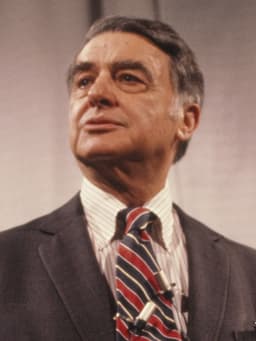
Orphaned at the age of 12, Hans Wilsdorf developed a strong sense of self-reliance that would later fuel his entrepreneurial success in the luxury watch industry. After his uncles liquidated the family business to finance his education, he became fluent in multiple languages and gained valuable insights into international markets while working for import-export firms specializing in Swiss watches. In 1905, he co-founded Wilsdorf and Davis, which eventually evolved into Rolex, a brand synonymous with precision and luxury, known for creating the first waterproof wristwatch in 1926. Wilsdorf’s journey illustrates the importance of adaptability, education, and firsthand experience in building a successful enterprise, making him an enduring inspiration for today’s entrepreneurs.
Core Principles
customer obsession
Expand the market by solving customer friction and inconvenience. The more work you do for the customer, the larger the potential market becomes.
Pocket watches required manual winding and were stored in pockets. Hans realized that by moving watches to the wrist and making them self-winding, he eliminated two major customer pain points. This single insight drove home the fact that the wristwatch market could be thousands of times larger than the pocket watch market because it removed friction from daily use.
“The wristwatch was bound to bring about a certain revolution in the industry. It would have to cause an increase in sales, not only on account of its novelty, but also because by its very nature, it called for more frequent renewal.”
focus
Maintain three to five core strategic principles and execute on them relentlessly for decades, never deviating. Consistency of vision over time compounds into dominant market position.
Hans identified three aims for Rolex: precision watches recognized as chronometers by observatories, waterproof protection against dust and impurities, and self-winding automatic movements. He pursued these three tenets from 1905 until his death in 1960, taking 20+ years to fully realize each one. His unwavering focus on these principles, never adding contradictory objectives, built the world's most valuable watch brand.
“On looking back into the past, I find that in developing and extending my business, I've always had certain aims in mind. This course from which I never deviated.”
innovation
Solve technical problems in sequence, as each solution unlocks the opportunity for the next innovation. Previous achievements create the foundation for future breakthroughs.
Hans first solved precision through observatory certification. Then he solved waterproofing with the Oyster case. Only then could he tackle the perpetual automatic movement, which required a sealed case to function properly. He explicitly stated that without solving waterproofing first, the perpetual watch would never have been discovered. Each technical victory enabled the next.
“Without the waterproof watch, the perpetual could never have been discovered.”
leadership
Preserve founder vision and intent by establishing governance structures that prevent dilution of principles after the founder's death. A well-designed trust can extend founder authority across generations.
In 1944, Hans created the Hans Wilsdorf Trust to own and control Rolex in perpetuity. He designed bylaws ensuring Rolex could never be sold or taken public, freeing it from quarterly earnings pressure. Over 60 years after his death, Rolex still operates according to his vision, making watches based on his three core principles rather than chasing short-term profit. This is extraordinarily rare in business.
Build long-term relationships based on mutual respect and handshake agreements rather than complex contracts. Trust and integrity can sustain partnerships for seven decades.
Hans made a handshake deal with the founder of Egler, the movement manufacturer, in 1905. The agreement was that Egler would manufacture movements exclusively for Rolex. This handshake deal, with nothing in writing, held unbroken for 70 years until Rolex purchased Egler in 2004. By that time, Rolex was worth billions, yet both parties honored their original commitment.
marketing
Create product demonstrations through physical displays and real-world scenarios that make product benefits tangible. Show, do not just tell, how your product solves the problem.
Hans created window displays featuring an aquarium with a Rolex Oyster submerged among goldfish, visually proving waterproofness. He ran ads showing a top British actress with her arm in a goldfish bowl wearing a Rolex. He placed watches on land speed record attempts and ocean expeditions. Each demonstration was a real event that proved capability, making the marketing claim impossible to doubt.
“We devise special window displays that which gave the buying public great pleasure. The chief feature was an aquarium with other plants and goldfish. And in it was plunged an oyster watch, which was the only watch in the world that was as watertight as an oyster.”
Invest heavily in direct-to-consumer advertising even when competitors do not, particularly if you are establishing a new brand. This creates customer pull that forces retailers to stock your products.
Hans spent more than 12,000 British pounds annually on advertising for several years in succession, an enormous sum at the time. No other watchmakers advertised directly to consumers. This strategy built demand so strong that retail customers would specifically request Rolex watches, shifting power from retailers to Rolex. Within decades, this inverted the entire industry structure.
“I decided to launch the Rolex trademark by means of an intensive advertising campaign. This policy entailed an annual expenditure of more than 12,000 British pounds, not for one year alone, but for several in succession.”
Maintain consistent marketing focus during downturns while competitors retreat. This captures disproportionate market share and brand awareness during recovery.
During the 2008 financial crisis, Rolex increased marketing spending while competitors Omega and Tag Heuer pulled back. Rolex's persistence during this period dramatically elevated its US market position and is credited by the company as a key turning point for their dominance. The same principle applied during Hans's era: competitors viewed advertising as discretionary, giving Rolex years of marketing advantage.
Leverage news events that already have audience attention by inserting your product into the narrative. Amplify existing attention rather than creating attention from scratch.
When British swimmer Mercedes Gleitze attempted to cross the English Channel, Hans provided her with a Rolex Oyster. She wore it for 10 hours in freezing water. The swim attempt was already getting press coverage. Hans then took out a full-page ad in the Daily Mail newspaper on the day the story was published, announcing that the Oyster kept perfect time during the entire ordeal. This single ad campaign launched the Rolex Oyster to fame.
“On November 27th, 1927, I reserved the front page of the Daily Mail newspaper at a cost of a ton of money for an ad proclaiming the success of the first waterproof watch.”
Build brand power by insisting your name appears on every product sold, even if retailers initially resist. The visibility of your brand name determines whether customers can demand it by name.
Retailers initially wanted to put their own names on watches. Hans had to fight for years, starting with one in six watches bearing the Rolex name, then two in six, then three in six, until finally five in six carried his name. Once customers could see Rolex on the dial and demand it specifically, he had power in the channel and could command better terms.
mindset
Education in multiple languages and exposure to international business creates unforeseen opportunities. Hans's linguistic abilities enabled him to secure a job handling business correspondence for an import-export firm, giving him direct insight into watchmaking markets worldwide.
At boarding school, Hans showed a particular liking for mathematics and languages. This inclination drove him to travel and work in foreign countries. His fluency in English, German, and French made him valuable to a Swiss import agent, where he gained intimate knowledge of the global watch industry before founding his own company at 24.
“I showed a particular liking for mathematics and languages. This inclination drove me to travel and work in foreign countries.”
Self-reliance built in childhood becomes the foundation for entrepreneurial success. Hans's uncles liquidated the family business to fund his education at boarding school, deliberately teaching him to depend on no one but himself.
Orphaned at 12, Hans was placed in a boarding school of excellent repute where he developed proficiency in multiple languages and a strong work ethic. He later reflected that this early self-reliance was the basis for much of his success as a founder.
“They made me become self-reliant very early in life. Looking back, I believe that it is to this that much of my success is due.”
Belief in an idea, even when the market and industry reject it, is the highest order bit that separates founders from others. Hans believed in wristwatches for men when the entire industry dismissed them as impossible and unmanly.
When Hans was 24, wristwatches for men did not exist. Industry experts argued the mechanism was too delicate, dust and water would destroy it, and accuracy was impossible. Despite universal skepticism, Hans maintained absolute faith. At 33, he boldly declared that pocket watches would disappear and wristwatches would replace them definitively. This unwavering belief, not passion, kept him moving forward through decades of technical problems.
“I had very early realized the manifold possibilities of the wristwatch and feeling sure that they would materialize in time I resolutely went on my way.”
product
Experiment with multiple brand names and product variations to learn what works, then consolidate around the winner. Trial and error through action provides faster feedback than analysis alone.
Before committing to Rolex, Hans used at least a dozen brand names including Unicorn, Rollco, Elvira, Falcon, and various Rolex combinations. He attempted to serve every price point in the market. Through these experiments, he learned that brand focus was crucial and that association with multiple price points diluted brand power. By 1908, he consolidated everything under the single Rolex name.
“It was time to think of giving our watches a name of their own, a trade name, which could be inscribed on the dials.”
Design the brand name with specific criteria that support long-term business success. The name itself should be a strategic asset that makes execution easier.
Hans deliberately chose Rolex because it met five specific criteria: five letters or fewer so it fit on watch dials, easy to pronounce in every language, good ring to it, easy to remember, and looked good visually. This careful naming strategy meant every piece of marketing, every dial, every communication reinforced the same clear brand identity.
“I needed a short name, had to be five letters or less, easy to pronounce in every language, have a good ring to it and be easy to remember.”
strategy
Identify problems in your industry that others see but do not attempt to solve. Problems are just opportunities for companies that have the courage and resources to solve them.
Hans recognized three major technical problems preventing wristwatch success: the mechanism could not withstand arm movement, dust and water would damage it, and small movements could not achieve accuracy. Rather than seeing these as reasons not to pursue wristwatches, he viewed them as a roadmap of innovation needed to win.
“In spite of all of this, I kept my faith in the wristlet watch and was determined to see what could be done.”
Acquire patents for key innovations quickly, within weeks if possible, to create exclusive competitive advantages that last for decades. Speed in securing IP rights is as important as the technology itself.
Two Swiss inventors created the first waterproof seal for wristwatches, filing a Swiss patent in May 1926. Hans learned of this, purchased the patent in July 1926, just two months later. By owning this patent, Rolex became the only manufacturer with access to this technology, creating an insurmountable competitive advantage that lasted for the patent's lifetime.
Working in a related field before starting your own business accelerates learning and identifies opportunities. Hans worked for two import-export firms handling Swiss watches before founding Wilsdorf and Davis, which gave him the confidence and knowledge to replicate and improve upon the model.
Hans spent six years learning the watch import business, studying watch types, manufacturing capabilities, and market dynamics. By age 25, he had absorbed enough domain knowledge to recognize what could be done differently. He then started his own company using the same distribution model but with his own branding strategy.
“My work there provided an excellent opportunity to study the watchmaking industry closely and to examine every type of watch produced both in Switzerland and abroad.”
Start with the business model you know, then innovate on it. Hans began by importing and reselling watches like the firms where he worked, rather than attempting to manufacture from scratch.
Wilsdorf and Davis had modest capital and no manufacturing capability. Instead of trying to become a watchmaker, Hans followed the proven import-export model he had learned, purchasing watches from Swiss manufacturers and selling them to retailers. Once the business was established and he understood market demand, he could then invest in technology and manufacturing innovation.
“They purchased watches from Swiss manufacturers and then would sell them to retailers.”
Frameworks
Three Core Tenets Model
Hans identified three non-negotiable principles for Rolex: precision (chronometer-certified accuracy), protection (waterproofing against dust, water, heat, and cold), and perpetuation (self-winding automatic movement). He pursued these sequentially over decades, never adding contradictory objectives. This framework forced focus and created a clear narrative for all marketing and product development.
Use case: When building a brand in a crowded market, identify 3-5 core principles that will guide all decisions for decades. Test whether each principle supports the others and creates competitive advantages.
Sequential Innovation Framework
Hans solved technical problems in order, recognizing that each solution created the foundation for the next breakthrough. Precision was solved first through certification. Waterproofing was solved second, enabling the perpetual automatic movement to be solved third. He explicitly understood that attempting innovations out of sequence would fail.
Use case: When facing multiple unsolved technical problems, map which innovations depend on which prerequisites. Solve in order, recognizing that early victories unlock future possibilities.
Brand Pull Strategy
Rather than relying on retailers to push products, Hans built direct brand awareness through intensive advertising, getting his name on every product, and associating the brand with the world's highest achievers. This created customer demand so strong that retailers had to stock Rolex, flipping the power dynamic. The brand pulled customers through the channel instead of being pushed by retailers.
Use case: When entering a category where distribution channels control the market, invest in building direct brand awareness and customer demand to shift bargaining power in your favor.
Proof-Based Marketing
Hans used independent third-party validation (observatory certifications, events, and demonstrations) to make marketing claims unassailable. Rather than claiming superiority, he arranged for independent bodies to certify it, then built advertising around phrases like 'the only' or 'the first.' This made the marketing claim factual rather than promotional.
Use case: Build marketing claims around independently verified facts and third-party certifications. Ensure your product has earned the right to claim superiority before advertising it.
Brand Name Criteria Framework
Hans developed specific criteria for selecting the brand name Rolex: five letters or fewer, pronounceable in every language, good ring to it, easy to remember, and visually appealing on the product. This forced discipline in naming and ensured the brand name itself was a strategic asset that supported long-term execution.
Use case: When naming a brand you intend to build for decades, apply specific criteria that support your business model and distribution strategy. The name should make execution easier, not harder.
Crisis Advertising Reversal
While competitors pull back on marketing during economic downturns, Hans (and his successors) maintained or increased advertising spending. This counterintuitive strategy captures disproportionate mindshare and market share during recovery, as brand awareness is easier to sustain than restart.
Use case: During industry downturns, maintain or increase marketing spending while competitors retreat. This positions you for dominant market share as conditions improve.
Stories
Hans was orphaned at 12. His uncles liquidated the profitable family business to fund his education at a top boarding school instead of giving him a ready-made business. Hans later realized this decision changed his entire life trajectory. The boarding school taught him languages, self-reliance, and independence.
Lesson: The most valuable inheritance is not money or assets, but education, self-reliance, and the skills to create your own opportunities. Difficult childhood circumstances, when managed wisely, create the psychological foundation for entrepreneurial success.
At 19, Hans got a job as an English correspondent for an import-export firm handling Swiss watches bound for dozens of countries. He handled business correspondence in multiple languages and gained intimate knowledge of global watch markets. By 25, he felt confident enough to start his own import-export firm. This single job gave him all the knowledge and confidence needed to found Rolex.
Lesson: Seek entry-level positions in the field you intend to build in. The education you gain from inside an industry is impossible to replicate from outside. Your first job can provide the foundation for your entire career.
When Hans was 33, he told someone he was confident pocket watches would completely disappear and wristwatches would replace them. The entire watch industry at the time viewed wristwatches for men as impossible and unmanly. Most people dismissed his opinion as absurd. Within decades, his prediction became complete reality.
Lesson: Your belief in an opportunity often precedes market validation by many years. If you have genuine insight into a large market gap and the courage to pursue it despite universal skepticism, you can reshape entire industries.
Hans spent years trying to sell watches under 15 different brand names, attempting to serve every price point in the market from cheap to expensive watches. He realized this was cannibalizing sales and diluting his brand. He consolidated everything under the single Rolex name in 1908 and never looked back.
Lesson: Multiple brand names and multiple price points create market confusion and dilute brand power. Focus on a single brand name and maintain clarity about what that brand stands for. Brand focus creates strength.
Hans made a handshake deal with Hermann Egler to manufacture watch movements exclusively for Rolex. The deal had no written contract, just two founders shaking hands. This agreement held unbroken for 70 years, even as Rolex became worth billions of dollars. When Rolex finally purchased Egler in 2004, it was to formalize a relationship that had never been broken.
Lesson: Relationships built on genuine trust and integrity can sustain business partnerships for generations. A handshake from someone of character is worth more than a thick contract from someone without integrity. Choose partners carefully and honor agreements.
Hans spent an enormous sum on advertising (12,000 British pounds annually for several years) when no other watchmakers advertised to consumers at all. He continued this strategy consistently, building brand awareness decade after decade. By doing this alone, he created a competitive advantage that lasted his entire lifetime and beyond.
Lesson: Be willing to invest in marketing and brand building while competitors dismiss it as unnecessary expense. Sustained investment in awareness, not matching competitors, compounds into dominant brand positioning over decades.
Hans heard that two Swiss inventors had created the first waterproof seal for wristwatches and filed a patent in May 1926. He learned of this, purchased the patent in July 1926, just two months later. By owning this patent, Rolex became the only manufacturer with access to waterproof technology, creating an insurmountable competitive advantage.
Lesson: When you identify key enabling technologies for your business, acquire patents or exclusive rights immediately. Speed in securing intellectual property rights is as important as the technology itself. This creates advantages lasting decades.
Hans took a full-page advertisement in the Daily Mail newspaper the day after a news story broke about a swimmer crossing the English Channel while wearing a Rolex Oyster watch. The news story had already attracted massive attention. Hans inserted his product into the existing narrative and took out premium advertising to amplify it.
Lesson: Rather than trying to create attention from scratch, identify news events that already have audience attention, insert your product into the narrative, and then amplify with advertising. You are layering marketing effort on top of existing media coverage.
Notable Quotes
“They made me become self-reliant very early in life. Looking back, I believe that it is to this that much of my success is due.”
Reflecting in his 60s on how his uncles' decision to liquidate the family business and send him to boarding school taught him self-reliance, which he credits as foundational to his entrepreneurial success.
“I showed a particular liking for mathematics and languages. This inclination drove me to travel and work in foreign countries.”
Describing his education at boarding school and how his linguistic abilities shaped his early career path in international business.
“My work there provided an excellent opportunity to study the watchmaking industry closely and to examine every type of watch produced both in Switzerland and abroad.”
Reflecting on his early job at an import-export firm where he gained comprehensive knowledge of global watch markets before founding his own company.
“In spite of all of this, I kept my faith in the wristlet watch and was determined to see what could be done.”
Responding to the industry's three main objections to wristwatches: that the mechanism was too delicate, dust and water would damage it, and accuracy was impossible. Rather than accepting these limitations, he viewed them as problems to solve.
“I had very early realized the manifold possibilities of the wristwatch and feeling sure that they would materialize in time I resolutely went on my way. Rolex was thus able to get several years ahead of other watch manufacturers who persisted in clinging to the pocket watch as their chief product.”
Explaining how his early conviction in the wristwatch's potential, combined with consistent execution, gave Rolex a multi-year advantage over established competitors who dismissed the opportunity.
“My personal opinion is that the pocket watches will almost completely disappear and that wristwatches will replace them definitively. I am not mistaken in this opinion and you will see that I am right.”
Speaking at age 33 in 1914 with absolute confidence in his market vision, long before wristwatches had achieved mainstream acceptance.
“It was time to think of giving our watches a name of their own, a trade name, which could be inscribed on the dials. I was well aware that unless I succeeded in making our watch known under its own name, that my prospects would be limited.”
Explaining his decision in 1908 to consolidate his multiple brand names under a single brand, recognizing that brand ownership was essential to building lasting value.
“I needed a short name, had to be five letters or less, easy to pronounce in every language, have a good ring to it and be easy to remember.”
In a 1958 letter, explaining the specific criteria he used to select the Rolex name, demonstrating intentional brand strategy.
“I decided to launch the Rolex trademark by means of an intensive advertising campaign. This policy entailed an annual expenditure of more than 12,000 British pounds, not for one year alone, but for several in succession.”
Describing his pioneering use of direct-to-consumer advertising when no other watchmakers advertised at all. This investment in brand building was counterintuitive but became foundational to Rolex's dominance.
“Another red letter day in the development of our firm was when a small Rolex wristwatch won a class A certificate at the famous K Q observatory. This was on July 15th, 1914. And it was a day I shall never forget.”
Writing 50 years later about the moment Rolex achieved the first class A observatory certificate ever awarded to a wristwatch, which became a cornerstone of his marketing strategy.
Frequently Asked Questions
What are Hans Wilsdorf's key business principles?▼
Hans Wilsdorf's core principles include: Expand the market by solving customer friction and inconvenience. The more work you do for the customer, the larger the potential market becomes.. Maintain three to five core strategic principles and execute on them relentlessly for decades, never deviating. Consistency of vision over time compounds into dominant market position.. Solve technical problems in sequence, as each solution unlocks the opportunity for the next innovation. Previous achievements create the foundation for future breakthroughs.. Founder Almanac has cataloged 21 total principles from Hans's career.
What can entrepreneurs learn from Hans Wilsdorf?▼
Key lessons from Hans Wilsdorf include: The most valuable inheritance is not money or assets, but education, self-reliance, and the skills to create your own opportunities. Difficult childhood circumstances, when managed wisely, create the psychological foundation for entrepreneurial success.. Explore 8 stories and 6 frameworks from Hans's experience.
What is Hans Wilsdorf known for in business?▼
Orphaned at the age of 12, Hans Wilsdorf developed a strong sense of self-reliance that would later fuel his entrepreneurial success in the luxury watch industry. After his uncles liquidated the family business to finance his education, he became fluent in multiple languages and gained valuable insights into international markets while working for import-export firms specializing in Swiss watches. In 1905, he co-founded Wilsdorf and Davis, which eventually evolved into Rolex, a brand synonymous with precision and luxury, known for creating the first waterproof wristwatch in 1926. Wilsdorf’s journey illustrates the importance of adaptability, education, and firsthand experience in building a successful enterprise, making him an enduring inspiration for today’s entrepreneurs.
More Fashion & Luxury Founders
Want Hans's advice on your business?
Our AI has studied Hans Wilsdorf's biography, principles, and decision-making frameworks. Ask any business question.
Start a conversation